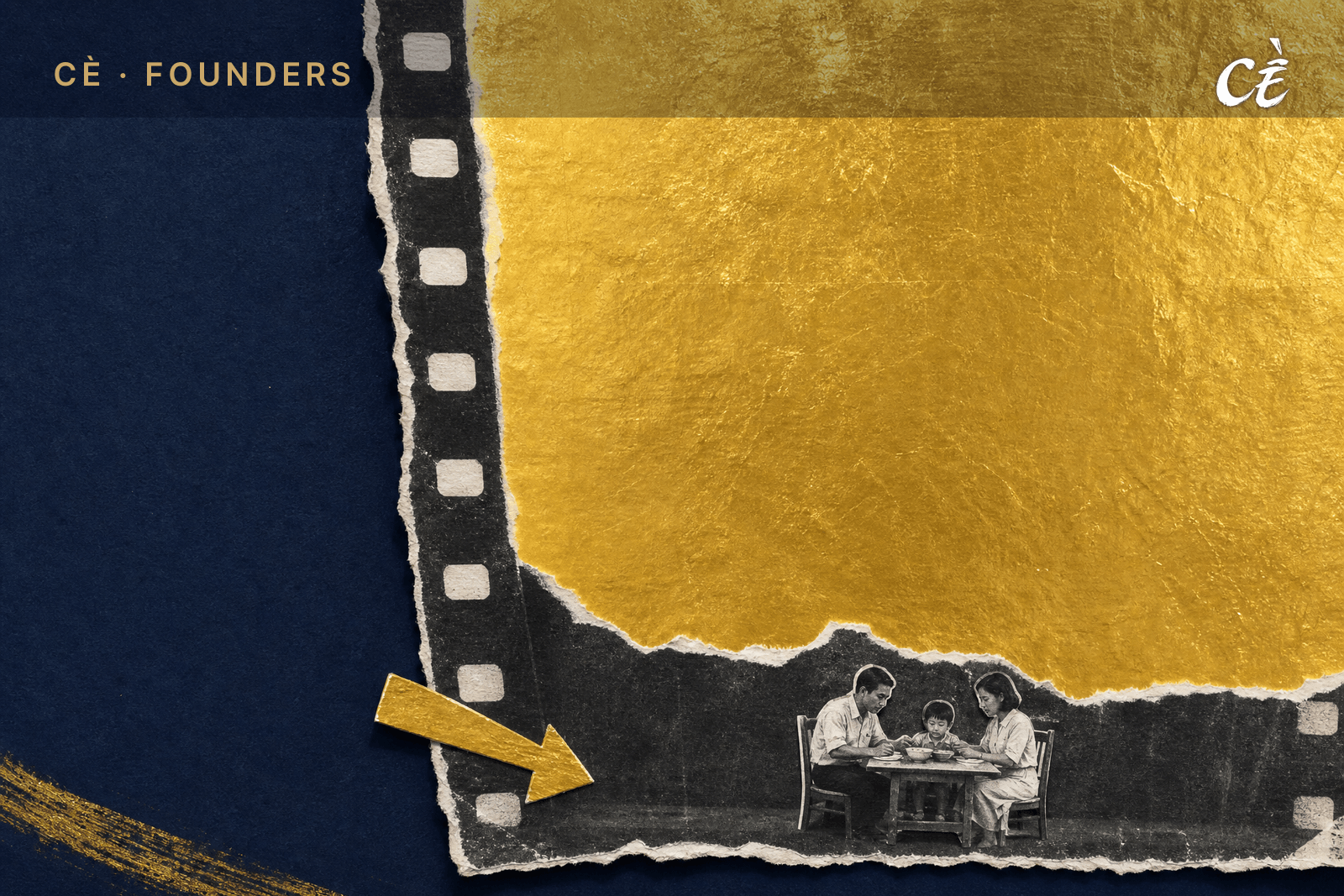
Asked to make a donation film for a Hong Kong church service that helps bereaved families through funeral arrangements, Ah Lok argued for one family instead of many, and then spent the brief deciding what to leave out.
“I chose not to show grieving faces, open tears, or any graphic or overly dramatic images of poverty or death, so as not to treat the families as objects of pity.”
I chose not to show grieving faces, open tears, or any graphic or overly dramatic images of poverty or death, so as not to treat the families as objects of pity.
Every organisation that has to communicate hardship runs into the same problem, usually without a rule for it. Donor appeals, restructuring notices, safety campaigns, patient stories, layoff memos: all of them are guessing where an audience stops following, and most of them guess by feel, in a meeting, under deadline.
Ah Lok, who signs his picture books Nalok Lok and whose partners include Hong Kong’s Social Welfare Department and Suicide Prevention Services, has a tested answer. He paid for it in readers.
His early books ran dark enough to become a positioning problem. Prospective clients grew hesitant about the work, and nobody told him why; what he noticed instead was a few people who had been interested quietly stopping and leaving. The books did not fail, and the drift was clear enough that he changed direction.
His correction keeps the emotional depth and gives the endings somewhere to go. That distinction is the whole finding.
An audience will follow a piece of work a long way into a difficult subject. It leaves at a specific point, and that point sits where the person on the page loses their dignity, or where the viewer loses the sense that anything can be done.
Ah Lok’s formulation runs to seven words: show the story, not the raw suffering.
I only show enough of the difficulty so that the meaning becomes clear.
The corollary he adds is the harder discipline. “I only show enough of the difficulty so that the meaning becomes clear,” which means the loneliness, the pressure and the quiet struggle stay in, while the spectacle goes.
He turns it into a checklist before anything ships. Does the reader still have room to breathe afterward, or does the piece need to be more subtle?
Is there still some human warmth in the frame, however dark the subject? Will they stay with the story, or feel the need to look away?
Three questions, asked in that order, on every piece.
The last safeguard is other people. He shows work to a small number of readers he trusts to be sensitive to emotional weight, and when they report that it feels too dense or too closed, he goes back and opens more space. A comms team can copy that arrangement tomorrow, and most already have the readers; what they lack is the instruction to those readers about what they are being asked to detect.
The reason the rule holds outside illustration is that it is really a rule about agency. A piece that overwhelms its audience has spent their attention on the wrong thing, because a reader who has been flattened cannot donate, act, vote, or forward it to anybody.
The Holy Carpenter film ran on one family’s story, told at full length, with the grief kept out of frame and the difficulty left in. That is the trade Ah Lok found by losing readers first, and it costs a producer nothing except the willingness to cut the most affecting footage they have.1
Footnotes
-
The obvious risk of a rule like this is sanitising, which serves the commissioner rather than the subject. Ah Lok’s guard against it is the second half of the sentence: enough of the difficulty for the meaning to be clear, with the loneliness and the pressure kept on the page. ↩