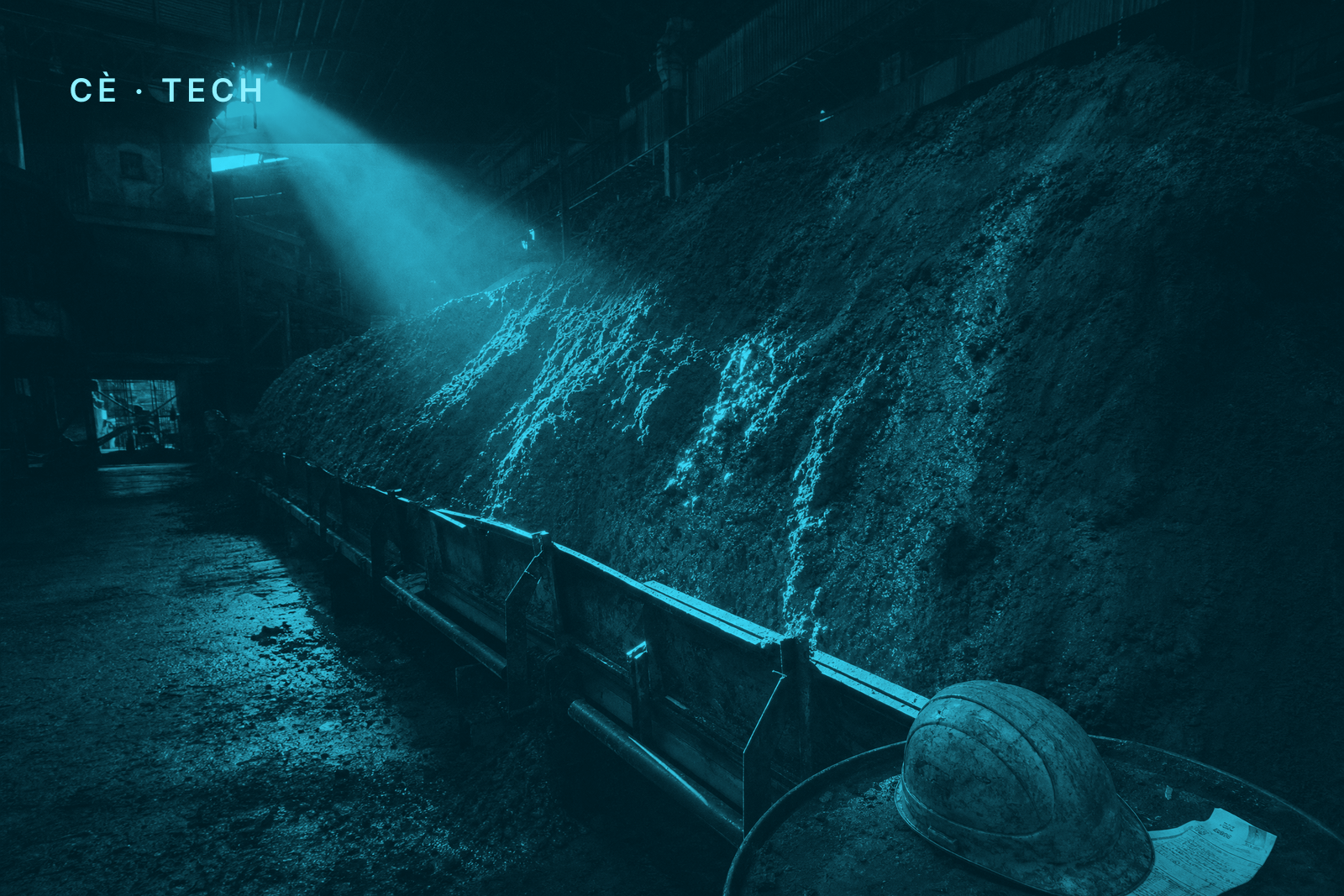
In a Jakarta conference room on 24 June, a mid-level official from the Downstreaming and Investment Ministry put a number on the ground beneath his feet. Speaking at the Korea-Indonesia Economic Partnership Forum, Ahmad Faisal Suralaga said Indonesia was open to US$121 billion to build an integrated national battery ecosystem, with a longer downstream path the ministry values at US$618 billion in investment, US$857 billion in exports, and more than three million jobs. The pitch was aimed at Korean capital. The subject was Indonesian rock.
The detail that should hold a regional operator’s attention is the inventory beneath the headline figure. Four of the six core materials in an EV battery, Suralaga noted, are in Indonesian ground: nickel, bauxite, manganese, copper. Nickel alone is 42 percent of world supply. The same official offered the multiplier that explains the whole strategy: processed into a battery rather than shipped as ore, the added value of that nickel rises as much as sixty-seven times.
A feature can be cloned by the second-best team in a quarter. A nickel seam cannot be cloned at all.
Here is the framework worth carrying out of that room. There are two kinds of advantage a company or a country can hold. One is a feature, a way of doing something that competitors can study and reproduce. The other is an input, a scarce thing the rest of the world has to come to you for. The region spends most of its attention on the first kind. Every week a new model ships somewhere between Singapore and Shenzhen, and every week the commentary treats the launch as a durable position when it is merely a feature. A feature can be cloned by the second-best team in a quarter. A nickel seam cannot be cloned at all.
Indonesia has read this correctly, which is why the 2020 ore-export ban matters more than any model release. By forbidding the export of raw nickel, Jakarta forced the value-adding steps, the smelting, the refining, the cell, onto its own territory. The bet is crude and durable: own the chokepoint, and the people who own the clever features upstream eventually have to pay rent.
The bet is not clean. The processing layer that Indonesia forced onshore is largely Chinese-owned. Chinese firms control roughly three-quarters of domestic nickel refining capacity, CATL and its partners have stood up a US$6 billion integrated plant, and Indonesia has absorbed around US$22 billion in Chinese EV-chain money.1 At the cell level the dependence is starker still: Chinese makers held 68.9 percent of global battery installations through October 2025, CATL alone at 38.1 percent. Owning the mine does not mean owning the margin. Jakarta has the ore; Beijing still has the recipe and the demand.
The region keeps scoring the software game because software is what it can see; the durable position is in the dirt.
The region keeps scoring the software game because software is what it can see; the durable position is in the dirt. For the smaller operator, the lesson compresses to one question. What do you hold that a better-funded competitor cannot simply rebuild. A logistics route nobody else has the licences to run. A supplier relationship priced over fifteen years. A dataset that took a decade of operations to accumulate. These are the founder’s equivalent of a nickel seam, and they are worth more than the feature shipped this quarter, which the market will have copied by the next.
What to watch is whether Jakarta can climb the value chain it already physically controls, or whether it stays a quarry with a good story. The ore is in the ground. The sixty-seven-times multiplier is still in the slide deck.
Footnotes
-
The figure most quietly damning to the sovereignty pitch is the smallest one: by some 2030 projections China’s share of refined nickel falls to single digits while Indonesia’s climbs past 70 percent. Ownership of the rock and ownership of the refining are drifting apart, which is the whole game. ↩