Every night for years, Cleanthes hauled water in a garden outside Athens so he could sit in Zeno’s lectures by day. He had arrived from Assos with four drachmas and a boxer’s frame, no family name to trade on and no seat saved for him among Zeno’s better-funded students.
Athens called him Phreantles, the well-drawer, and did not mean it kindly.
He kept both jobs anyway, water by night and philosophy by morning, for as long as it took.
The line he is remembered for reached us in Seneca’s Latin, three centuries later: fate leads the one who is willing, and drags the one who is not. Epictetus kept the same idea as the closing lines of his own handbook. Nietzsche, writing in 1882, gave the underlying discipline its modern name, amor fati, Latin for loving your fate.
Not agreeing that your fate is fair. Refusing to spend the part of you that is willing fighting the part that has already happened.
A garment exporter working out of Phnom Penh has spent the sixteen months since finding out what that actually asks of a person.
In April 2025, Washington told Cambodia to expect a 49 percent tariff on everything it ships to the United States. By that August, negotiation had settled the number at 19 percent, and she rebuilt her costing around it. In February 2026, the Supreme Court threw out the law the president had used to set that number in the first place, ruling it had never given him the power to tax imports that way.
Four days later, a different law supplied a flat 10 percent tariff in its place, a stopgap good for a hundred and fifty days.1 By July, a third law had layered its own duty on top, and her number settled back near 10 percent, this one aimed at countries that had not signed the strongest labour terms.
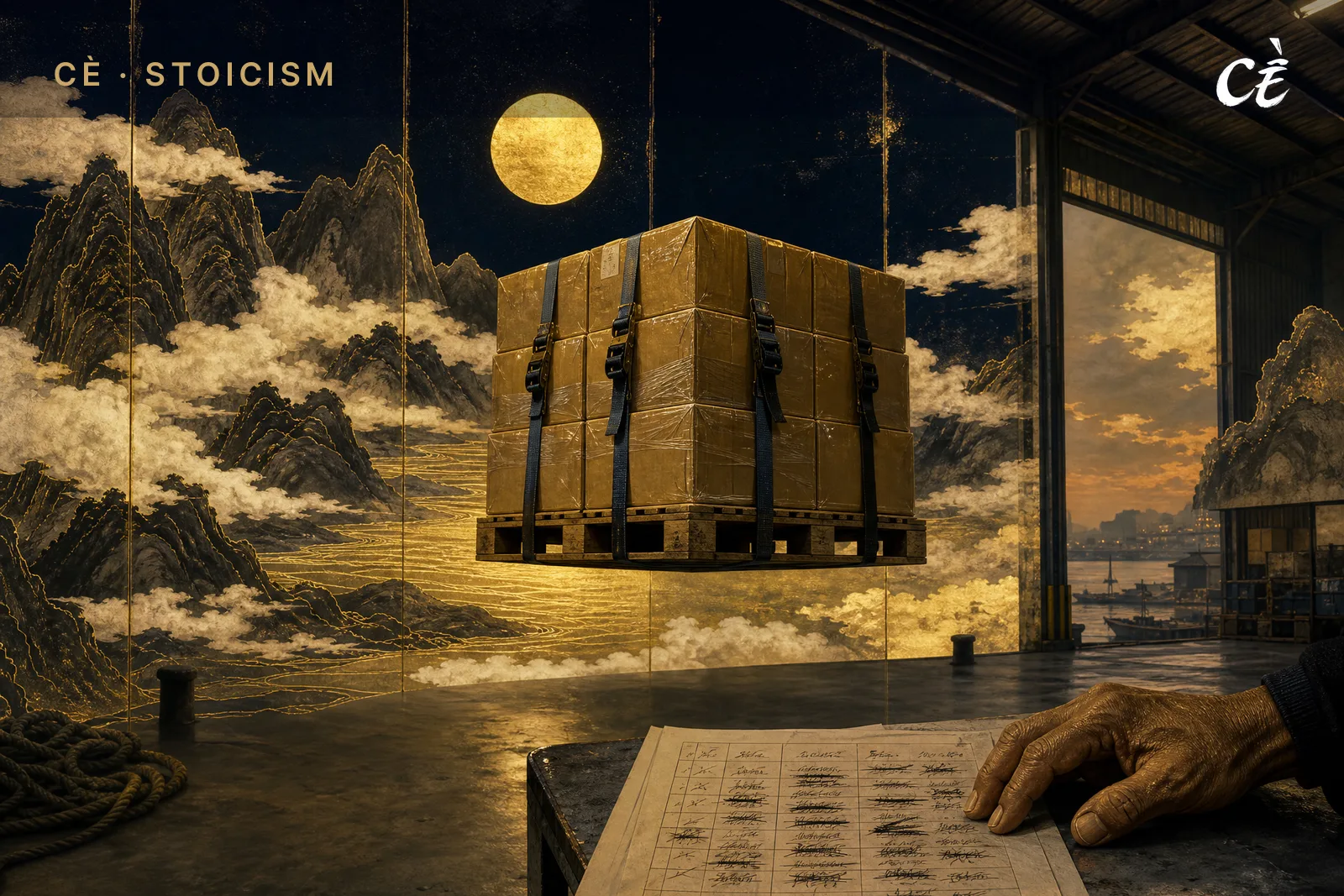
Five different numbers governed the same shipment inside sixteen months. Not one of them was hers to set.
Five different numbers governed the same shipment inside sixteen months. Not one of them was hers to set.
None of it was ever going to be her vote.
Fate leads the one who is willing, and drags the one who is not.
She could spend the freed morning hour refreshing trade press, waiting for a ruling to land in her favour before she requotes anything. It never has. The habit costs her the hour and buys back no margin at all.
Amor fati does not ask you to agree that a number is fair. It asks you to run the business against whichever number is true the day it becomes true, and to stop costing shipments against the one you wish were still standing.
She requotes the moment a new duty publishes, not the week she finishes being annoyed by it. The order that clears under the new math ships. The one that does not gets renegotiated or dropped before it becomes a debt she is carrying on principle.
What she keeps, through five resets, is the order she prices tomorrow morning, against tomorrow morning’s number.
What she keeps, through five resets, is the order she prices tomorrow morning, against tomorrow morning’s number.
Cleanthes never got a vote on Zeno’s tuition either. He hauled the water in front of him, at the hour it needed hauling, then walked into the lecture hall anyway, smelling of the garden trough.
Zeno’s better-funded students had the reserved seats. Cleanthes had the morning shift, and eventually the school itself, when he succeeded Zeno as its second head.
Fate leads the one who is willing, and drags the one who is not.
Footnotes
-
The stopgap did not hold either. A trade court rejected that same 10 percent tariff in May, on much the same grounds the Supreme Court had used against its predecessor. By the time the July duty arrived, the hundred and fifty days Washington had given itself were nearly up anyway. ↩