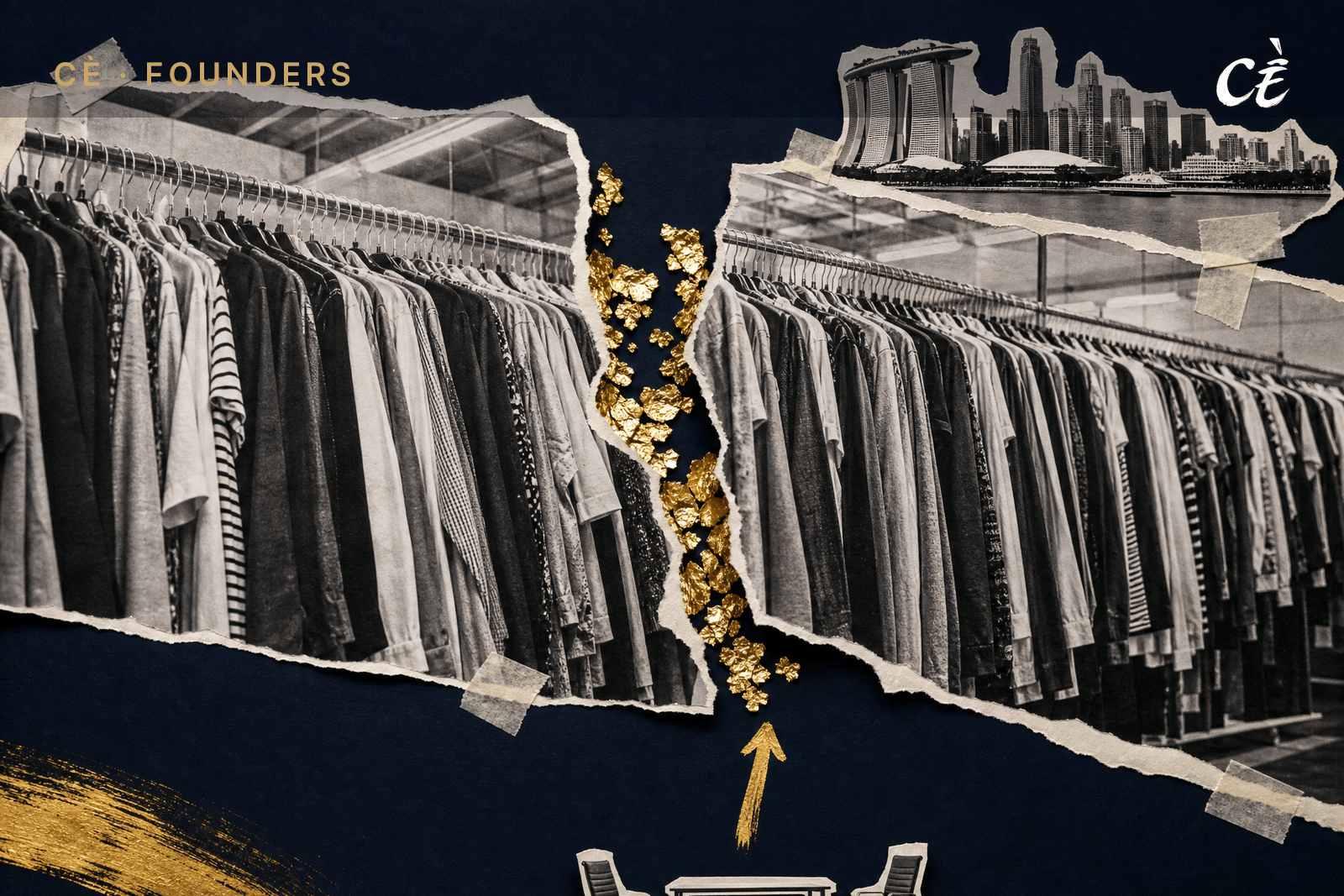
Zilingo’s board suspended chief executive Ankiti Bose on the last day of March 2022. Fifty-one days later she was terminated for cause, and within a year the Singapore fashion platform, valued at US$970 million in 2019, was headed into liquidation while its founding team fought in public and creditors recalled their loans.
The probe that started the collapse was about accounting. The force that finished it was people.
That force has a number. Noam Wasserman, who spent a decade at Harvard Business School studying ten thousand founders, found that 65 percent of startup failures trace to people problems, tensions between co-founders chief among them.
Which makes the person across the table the single largest unpriced risk in any early-stage venture.
Founders run diligence on the market, the model and the money. The co-founder gets a few dinners and a feeling.
Jane Ng has paid the people tax often enough to have built a hedge against it. Twelve companies since 2011; the failures she itemises were partners who, in her phrase, “gave up and ran when they felt like it,” the last of them walking out of her Taiwan e-commerce venture in December 2025 and leaving her a month of wreckage to settle. When she signed her next co-founder this March, at CÈ Media, the publication running this essay, she had already run what amounts to a four-part audit, none of it askable in a meeting.1
She watched what he did with her ideas: killed none, moved each along, and, asked for output, returned the feasible few already sorted against the market. She watched what he did with her plan: thirty build items went over, and a fourth-version document came back with seven pillars and everything more than a year out cut.
A partner who cuts your plan and is right about the cuts is showing you judgement, not enthusiasm.
A partner who cuts the plan and is right about the cuts is showing judgement, not enthusiasm.
She watched how he treated people who could advance nothing, which told her more than anything aimed her way. And she listened for what never came up: he built the publication’s site unprompted, and shares were not mentioned once.
Her verdict: “He doesn’t fit into any role; all roles fit him.”
The audit’s virtue is where it runs: before there is anything worth fighting over. Zilingo’s people problem surfaced the way they usually do, during fundraising due diligence, with close to a billion dollars of paper value already stacked on the fault line.
Courtship dinners and reference calls sample a candidate performing. Ng’s checks sample behaviour nobody thinks to perform: treatment of bystanders, appetite for cutting, comfort with staying silent about money.
None of it lengthened the courtship. It redirected attention she was already spending, at meals she was already taking, in the weeks a partnership usually coasts on chemistry.
The rule transfers to anyone staring at a term sheet with a stranger’s name beside their own: watch what the stranger does with the ideas, the plan, other people and silence. Ng’s summary of the alternative took her a decade to afford: “You don’t need too many sub-par cooks to create the winning broth.”
Footnotes
-
Disclosure: Ng co-founded CÈ Media, and the co-founder who passed her audit is CÈ’s other co-founder. Her quotes come from her two sittings with CÈ’s AI interviewer in July, lightly normalised for print (capitalisation and punctuation only, wording untouched); transcripts on file as the audit trail. Zilingo details per Fortune’s contemporaneous reporting; Wasserman’s figure per his Founder’s Dilemmas research. ↩