
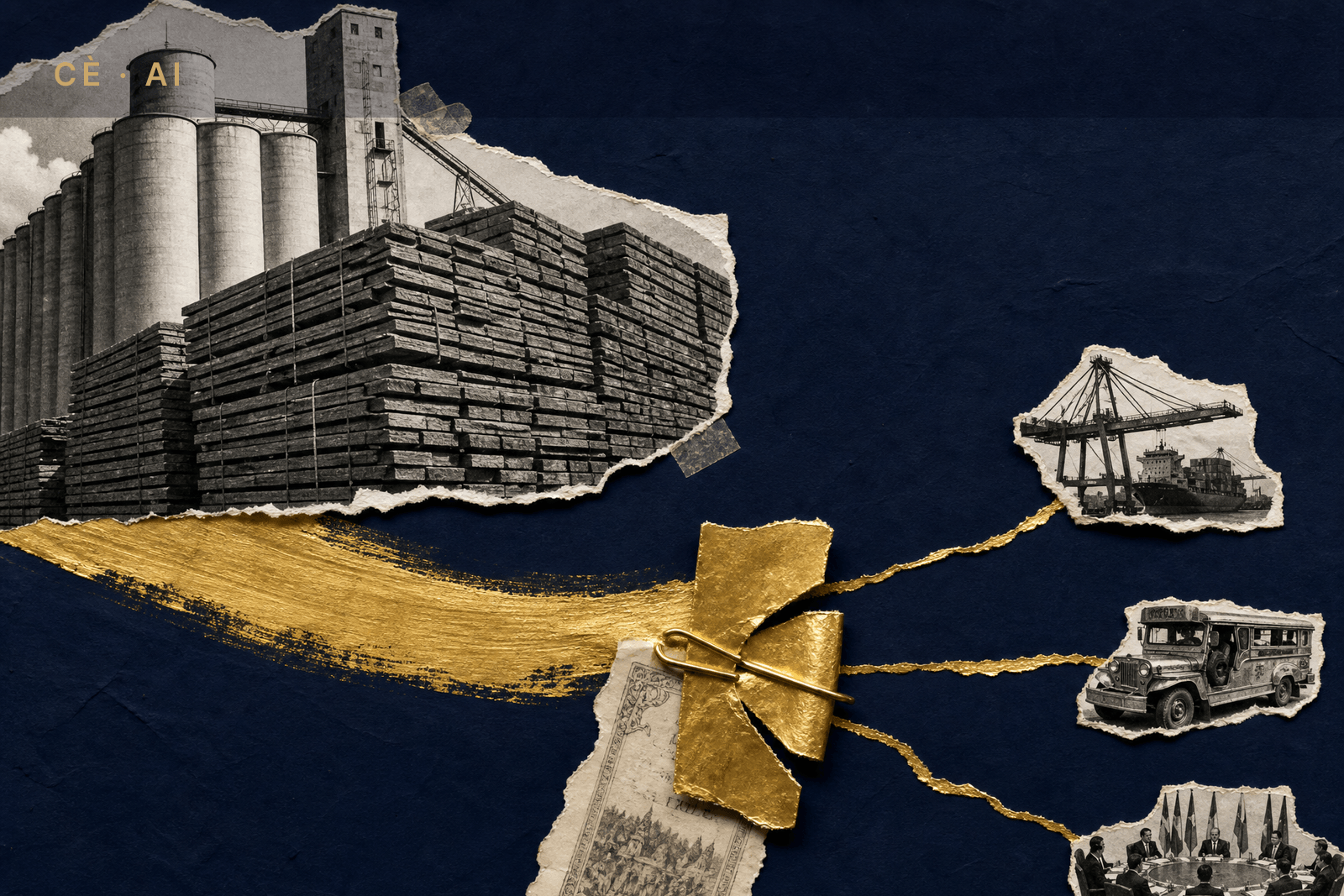
On 21 July, delegations from nine countries filled the Commons chamber on Parliament Hill and began a month of bargaining over tariffs. R.B. Bennett took the chair.
They came out on 21 August with twelve bilateral agreements, most of them five-year pacts, all built on one rule: home producers first, empire producers second, foreign producers last.
The foreign producer everyone had in mind was American. Two years earlier Washington had raised duties across the board and Ottawa had answered with tariffs of its own, and by the end of the decade the share of Canadian exports going to Britain had climbed from 28 percent to 38, with the Empire’s share of Canadian trade rising from 36 to 48.
That was 1932.
At midnight on 21 August 2026 a 50 percent American tariff took effect on about US$28 billion of Canadian goods, wine and cement and hockey sticks among them, roughly five percent of what Canada ships south in a year. Mark Carney said Canada would match it dollar for dollar from 8 September.
The tariff is the smaller half of the week.
Carney named three American demands that broke the talks. The first was the treatment of Canadian content in vehicles. The third was Quebec’s language and culture rules.
The second was language limiting the trade agreements Canada could sign with other countries.
A buyer who asks the seller to stop meeting other buyers has priced the relationship out loud.
A buyer who asks the seller to stop meeting other buyers has priced the relationship out loud.
Most readings of the week treat the duties as the leverage. The leverage is the market. Canada sends close to 70 percent of its exports to a single customer, and a customer is the one bottleneck in the trading system that does not fire back at the party holding it, because a mineral can be re-sourced and a fab can be rebuilt and demand cannot be replaced on the same clock.
This column bet in July that the demand-side chokepoint holds for exactly that reason. What arrived this week is the same reading, written down by the party holding the chokepoint and put on the table as a clause.
The clause is the expiry date printed on the leverage.
The clause is the expiry date printed on the leverage. It works only while the target has nowhere else to sell, so the holder has to buy the other buyers before they show up.
Ottawa refused, and the refusal is the forecastable event, because now the second buyer has to exist.
Take the inventory. Washington holds the demand and a closing window.
Canada has 40 million consumers, one land border and a shelf of agreements reaching 1.5 billion people. ASEAN has close to 700 million consumers and seven unfinished chapters.
Nineteen of the twenty-six chapters of the Canada-ASEAN agreement are closed. The Jakarta round ran from 30 June to 3 July, and what is left is trade in goods, rules of origin, government procurement, sustainable development and final market access, which is to say all of the hard ones.
The target is an announcement at the leaders’ meeting in November.
The escape hatch is real and it is small, and both halves of that sentence matter. Canada’s first bilateral agreement with an ASEAN country, the Indonesia partnership signed last September, is projected to add about $173 million a year to Canadian exports against $125 million a year in duties Ottawa gives up to get it.
The tariff that landed on Friday covers $28 billion.
One number is roughly a hundred and sixty times the other, and the smaller one is the one that compounds.
That was the shape in 1932 too. Imperial preference moved ten points of export share over a decade rather than a quarter, and its more durable effect was the one Washington’s negotiators appear to have studied: the Ottawa pacts made a subsequent deal with the United States harder to reach, because a preference written into a treaty with a third party is not a concession the next American negotiator can undo.1
So the bet. Canada and ASEAN announce the conclusion of their negotiations on or before 31 January 2027, after the November leaders’ meeting and before the Indonesia agreement finishes clearing into force, and this column logs it as a lean rather than anything stronger, because the seven chapters still open are the ones that have resisted four years of rounds.
The call rests on one thing: that goods market access and government procurement are stalled on political will rather than on any structural incompatibility, so that a 50 percent tariff supplies what the rounds could not. Should the sticking point turn out to be Vietnamese and Indonesian procurement carve-outs that no Canadian tariff shock can move, the deal slips past the window and the reading is wrong.
The nearer signal costs nothing to watch. Carney told Ferdinand Marcos Jr in Vancouver that the Canada-Philippines agreement was on track to close before the end of this year, and a bilateral with Manila landing ahead of November means the regional text is close behind it.
Bennett’s delegates spent a month in a borrowed chamber to move ten points of trade. Carney’s negotiators were asked, in the last hours, to sign away the right to try.
Footnotes
-
A 2024 study cited alongside the conference record argues the Ottawa agreements did less for Canada than the headline shares suggest, because Canadian tariffs on foreign goods were already high enough that preference added little at the margin. ↩