On 23 March 1983, Ronald Reagan went on television from the Oval Office and asked for a shield that could make nuclear weapons “impotent and obsolete.” He was proposing to shoot down Soviet missiles from space, using technology that mostly did not exist yet and a program that had not yet built any of it.
The press called it Star Wars before the ink on the speech was dry. It worked exactly like a working system on the one metric that actually mattered: Moscow could not verify what the United States had built, only what it now claimed to have. A superpower with a shield it might not need to use can spend a rival’s planning staff and budget for years, just making them check.
That was 1983.
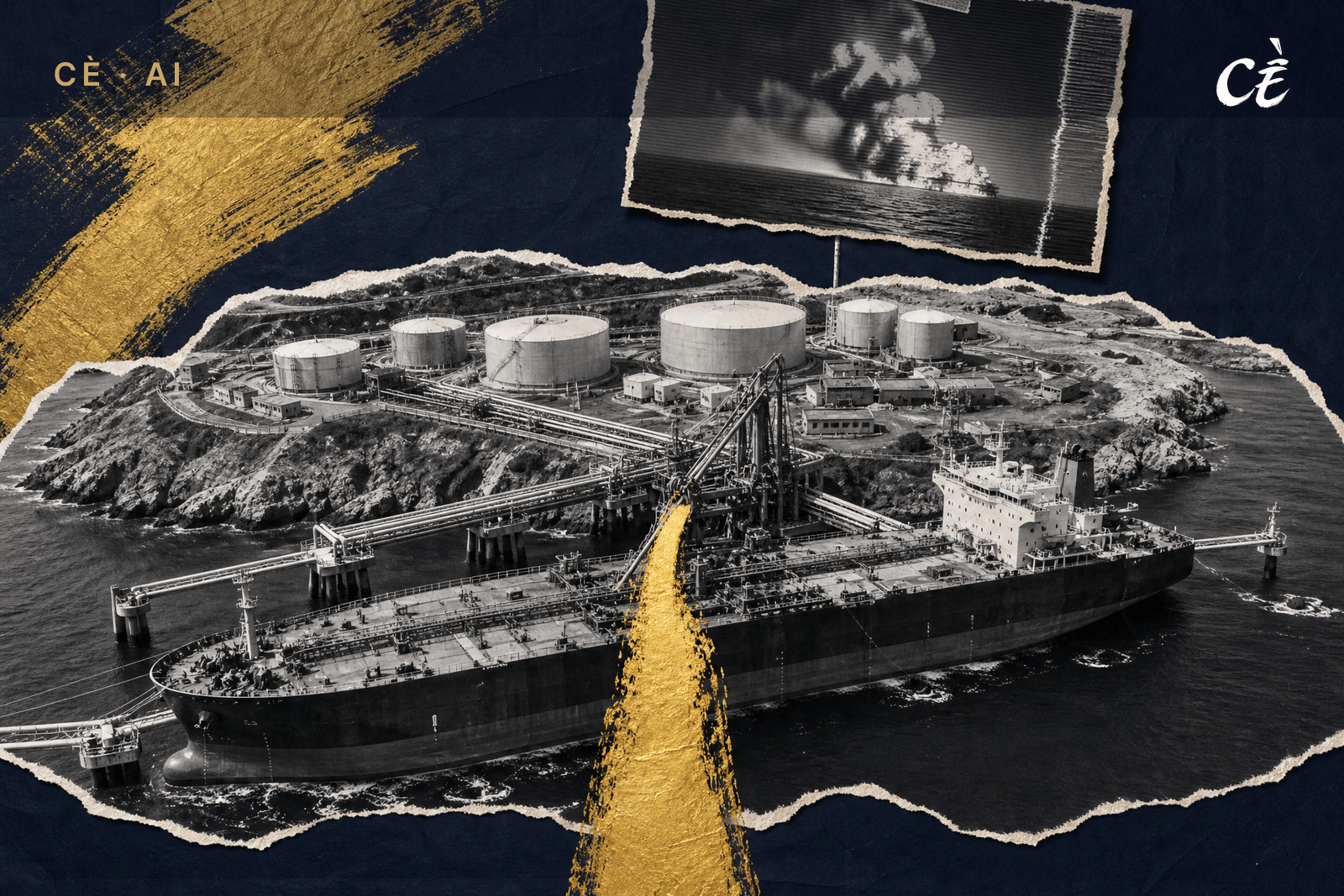
On 1 September 2026, Donald Trump posted a video of an oil terminal erupting in flame and called it Kharg Island, “blown to smithereens.”
The video was AI-generated. A US official told Reuters the real strikes that night hit two missile launchers on Larak Island, roughly ninety miles away, that were being readied to lay mines in the Strait of Hormuz.
Kharg, which loads close to ninety percent of Iran’s crude exports, was never touched. Iran’s state oil company called the clip “laughable” and kept loading tankers on schedule.
Vice President JD Vance did not deny it. He told reporters the video was meant to send Tehran “a message” about the cost of further attacks on shipping.1
To put it bluntly, faking the Kharg strike was the disciplined decision Washington made that week.
Most of the coverage read the fake video as an embarrassment, a president caught bragging about a strike that never happened. That misreads the incentive on the American side. To put it bluntly, faking the Kharg strike was the disciplined decision Washington made that week.
Kharg is the pipe Iran’s war effort drinks from. The island loads oil at a rated capacity near seven million barrels a day; over the past year it has actually moved something closer to 1.6 million, a fraction of what the terminal could push if nothing else constrained it, and the blockade has since squeezed even that.
Chinese imports of Iranian crude through Hormuz ran around 530,000 barrels a day in July and August, down more than a third from earlier in the year.
Iran can absorb that kind of squeeze. What it cannot absorb is the terminal itself going dark, because a state still fighting a war it can plausibly negotiate its way out of behaves nothing like a state whose income has just been switched off at the source.
This column bet in June that the Strait of Hormuz would not see a multi-week, near-total closure before mid-2027, on the reasoning that Iran’s own oil revenue runs through it and Tehran cannot afford to shut its own income. That call is under real pressure now, because the hand closing the strait in September is American, not Iranian, and the essay never priced a US-imposed blockade. That is a fair complaint, and it stands on the record here rather than argued away.
But the mechanism underneath it, that dependence on oil revenue shapes what a combatant can afford to destroy, is exactly what an intact Kharg terminal and a fake Kharg strike video are both consistent with. Washington now needs that dependence intact almost as much as Tehran does, because it is the thing keeping this a war with an exit rather than a war fought to the last tanker.
Run what each side is actually working under. Washington wants credit for reaching Iran’s oil lifeline without paying the cost of turning a cornered, revenue-dependent adversary into one with nothing left to lose.
Tehran wants to keep selling what oil it still can without losing the one asset still buying its regime time. Beijing, the buyer both capitals know is watching, wants the barrels cheap enough that Shandong’s independent refiners are not forced into costlier substitutes, which is why the real story in the crude market that week was a shrinking Iranian discount offer to Chinese buyers, not a burning terminal.
The discount is the tell worth watching, more than the video. A terminal left standing and a discount that keeps narrowing say the same thing from two different ledgers: the oil still has to move, and everyone downstream of Kharg, in Beijing and on the trading desks that read Beijing’s appetite, is pricing it as though it will.
The assumption underneath this reading is narrower than it looks. It holds only as long as Washington wants Tehran’s oil revenue flowing enough to keep the war endable by negotiation rather than fought to the last barrel.
If the administration decides the target is the regime’s survival rather than its income, a real strike on Kharg’s loading terminal stops being the irrational move and becomes the obvious one.
Expect the fake strike to keep recurring before the real one does. Specifically: before 15 December 2026, roughly the point at which the current strike tempo either forces a real decision on Kharg or gets overtaken by a negotiated pause, Washington will produce at least one more fabricated or exaggerated damage claim against a high-value Iranian target, an AI video, a disputed kill claim, something in that register, while its acknowledged, verified strikes keep declining to touch Kharg’s loading terminal itself. Call it a likely bet, close to three in four.
Two things confirm or break it, and both cost nothing to check.
Watch whether any tanker-tracking data or satellite imagery ever shows verified damage to Kharg’s terminal itself, as against the island around it. Watch whether the next Trump strike claim gets the same quiet correction from a US official that this one did.
Reagan’s shield never had to work to do its job.
Kharg only has to keep loading.
Kharg only has to keep loading.
Footnotes
-
Trump had already threatened, back in March 2026, to “obliterate” Kharg Island if no deal was reached, and did not follow through then either. The fake video reads less like a new strategy than an old signal finding a cheaper format. ↩