
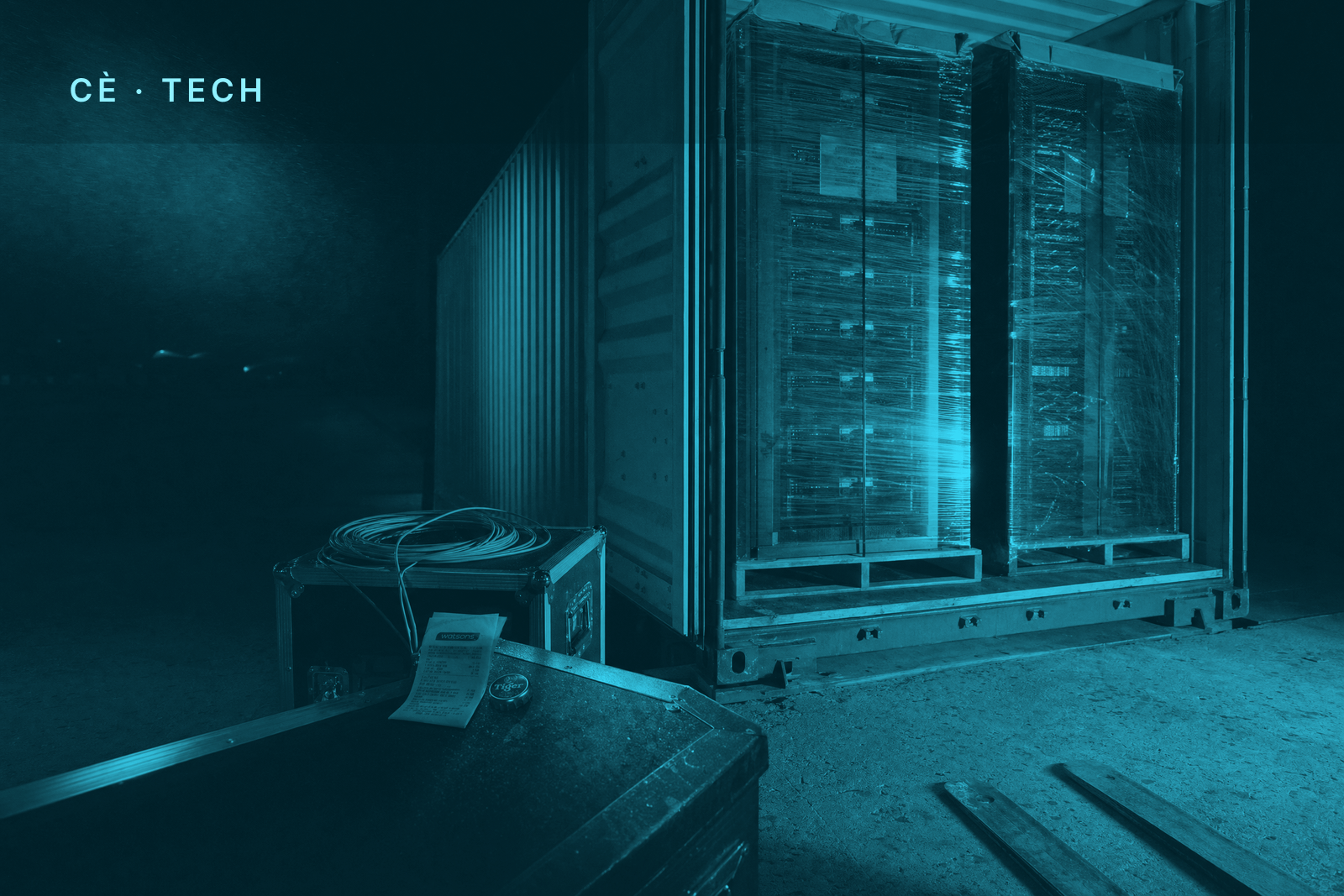
Walk the fenced edge of Iskandar Puteri in Johor this year and the buildout is not abstract. AirTrunk’s first two campuses there, JHB1 and JHB2, carry more than 420 megawatts of IT load between them and are almost fully contracted; two more, JHB3 and JHB4, are going up alongside, taking the Australian operator’s committed spend in Malaysia to roughly US$6.8 billion for 700 megawatts of capacity. The land is Malaysian. The power is Malaysian. The water cooling the racks is Malaysian. The tenant, in most of these halls, is not.
That is the shape of the whole region now. Southeast Asia holds more than 2,000 operating data centres with over a thousand more in planning, and the money is heading toward roughly US$30 billion of annual data-centre investment by 2030. Microsoft has committed US$5.5 billion to Singapore through 2029. Google put US$2 billion into its first Malaysian data centre and cloud region. AWS pledged US$9 billion to Singapore, ByteDance US$8.8 billion to Thailand. The cheques are enormous and they are almost all inbound.
The temptation is to read this as a colonial trade pattern with better air-conditioning. Ship out the raw input, cheap power, cheap land, water the region cannot spare, and import the finished good, someone else’s model, at full markup. The complaint scans. It is also useless to anyone actually running a company here, because the macro question, does the region capture value, is the wrong unit of analysis. The unit that pays your staff is whether you capture value.
Infrastructure is a landlord business, and landlords collect rent, not upside.
Here is what the buildout does and what it pointedly does not do. It does convert Johor grid connections and Singapore power releases into contracted, dollar-denominated rent for whoever owns the concrete and the transformers. It does not hand the host country a claim on what runs inside. The land, the power and the water are local; the models, the margin and the IP are booked somewhere with a lower tax rate and a colder climate. A hyperscale campus is a very large, very expensive shed you let by the megawatt. Infrastructure is a landlord business, and landlords collect rent, not upside.
Rent is not nothing. The steelman is real and worth stating plainly. Google’s Malaysia commitment alone is estimated to add US$3.2 billion to GDP and 26,500 jobs by 2030; the grid gets rebuilt, the transmission planners finally get funded, and a bench of engineers who can run high-density AI cooling forms in Cyberjaya and Batam and does not un-form when a tenant leaves. Deloitte projects data centres could draw between 2 and 30 percent of national power across ASEAN by 2030, up from a rounding error today, which is a strain and also a forcing function that drags a decade of deferred energy investment forward. A region that hosts the compute is closer to the frontier than one that does not.
The land, the power and the water are local; the models, the margin and the IP are booked somewhere with a lower tax rate and a colder climate.
The question for the operator is narrower and colder than the GDP figure. What does the tenant need that the tenant cannot build. Not the GPU; the tenant already owns the GPU, or rents it from Nvidia, and can pour another campus in Batam the moment Johor’s power queue gets long. The scarce thing is the customer relationship, the local distribution, the regulated licence, the data that only accrues to whoever already serves the merchant in Surabaya or the clinic in Cebu. Alibaba Cloud can open five data centres in Malaysia off the back of a US$53 billion global infrastructure programme1; it cannot as easily manufacture a decade of trust with an Indonesian bank’s risk committee. Own the thing the campus commoditises around, and the campus becomes your supplier rather than your landlord.
The tell is the contract length. AirTrunk’s Johor halls fill on multi-year hyperscale leases before the roof is finished. The tenant is buying certainty and buying it cheap. The host is selling the one thing it will not run short of, and calling the cheque an investment.
Footnotes
-
The US$53 billion is Alibaba’s 2025 commitment; management has floated raising it toward US$69 billion. The number that matters to a Johor landlord is smaller and quieter: the length of the lease. ↩