
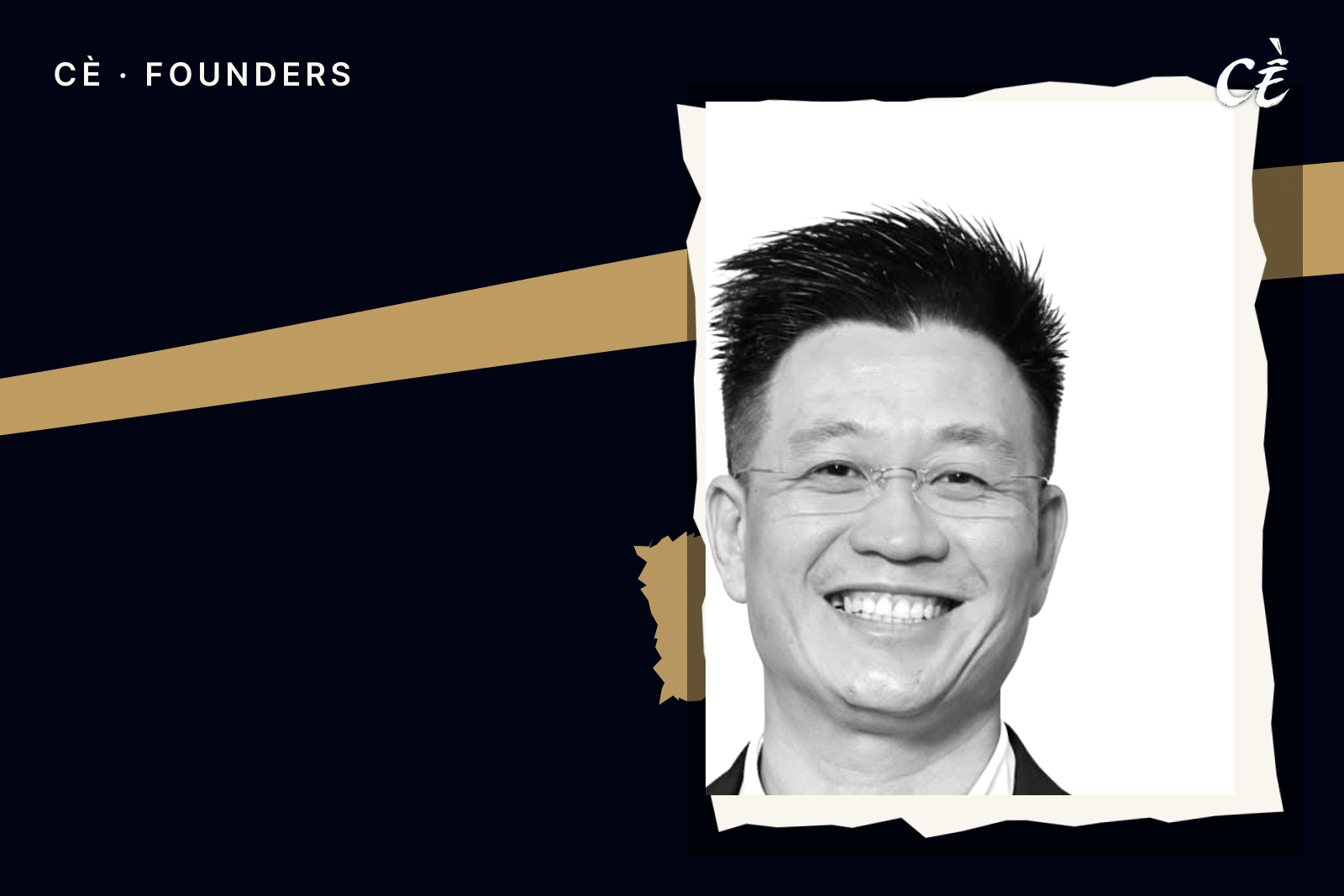
Jonathan Por has spent a decade walking business owners toward the stock exchange, and the mistake he names first in his own trade is pushing them onto it.
“Trying to persuade a traditional and conventional business owner to go public,” he says, asked what most advisors in his position get wrong. Por founded PIF Capital, a Singapore firm that trains owners and does pre-IPO work, the preparation a private company needs before it first sells shares to the public.
So which owners should list, and who decides?
He came to the question from flooring. Por built Supreme Floors, a wood-flooring company now some thirty years old, collected the Singapore Prestige Brand Award for it in 2007 and 2008, and handed it to his brother to run about ten years ago.
The turn came with an Asia Pacific entrepreneurship award in 2009. “I do not want to retire as a flooring subcontractor,” he says of that year.
After years in courses run by corporate-finance experts and listed-company bosses, he launched his own programme with his wife in 2016, on equity finance: raising money by selling part of the company instead of borrowing.
Members paid about US$780 (S$1,000) to join, and the first sale came a month in. Por says the business cleared more than US$780,000 (S$1 million) in profit in each of its first three years, 70 percent of it from memberships and 30 percent from consultancy mandates worth US$39,000 to US$78,000 each.
Those mandates are where his view of owners formed.
“Basically all SMEs do not have a business model, unlike MNCs,” he says, setting small and medium firms against multinationals. A small firm earns from a better product or service and fights rivals head-on, into price wars and loans; a bankable model earns from a structure an investor will pay for, such as brand licensing or a tech platform.
Most importantly, for a company to list, it’s the key man’s willingness and ability.
His example is SSF Home Group, a Malaysian furniture retailer trading since 1990. Por says the model was buying upstream suppliers so the group’s valuation carries their profits too; PIF ran the early pre-IPO training, and SSF listed on Bursa Malaysia’s ACE Market in October 2023.
Then comes the funnel. Asked about a record of more than ten IPOs, Por credits it to Henry Lim, PIF’s corporate finance director at the time, and gives his own count: three companies from his training community have completed a listing, with PIF doing the early work.
Three from 5,000 reads like attrition. Por reads it as selection, and the filter is a person.
Most importantly, for a company to list, it’s the key man’s willingness and ability.
Call it the key-man test. Por checks revenue and the business model too, but Singapore’s Catalist board, the Singapore Exchange market for smaller companies, sets no minimum profit or track record and leaves suitability to a sponsor, so the numbers can be worked on and the owner’s appetite for shareholders cannot.
His clearest case is a family rice distributor. The family chose to stay private rather than answer to other shareholders, Por did not push, and they stayed in the community, attending courses and hiring PIF for business advice.
“Many business owners have their own capacity growth and contentment, and there’s nothing wrong with that,” he says.
That is the CÈ read on how he works. He decides out loud, the way he left flooring; he keeps a client who declines his core product; and when a flattering number is put to him, he hands it back to the colleague who earned it.
The key-man test is the cheapest diligence in the listing business, one question to the owner before anyone opens the accounts, and the man who refused to retire as a flooring subcontractor now asks it for a living.1
Footnotes
-
Por sat with CÈ’s AI interviewer on 14 September 2026, by text. He quoted his figures without a currency; CÈ reads them as Singapore dollars, the currency of both his firms. Quotes lightly normalised for print, wording untouched, transcripts on file. ↩