
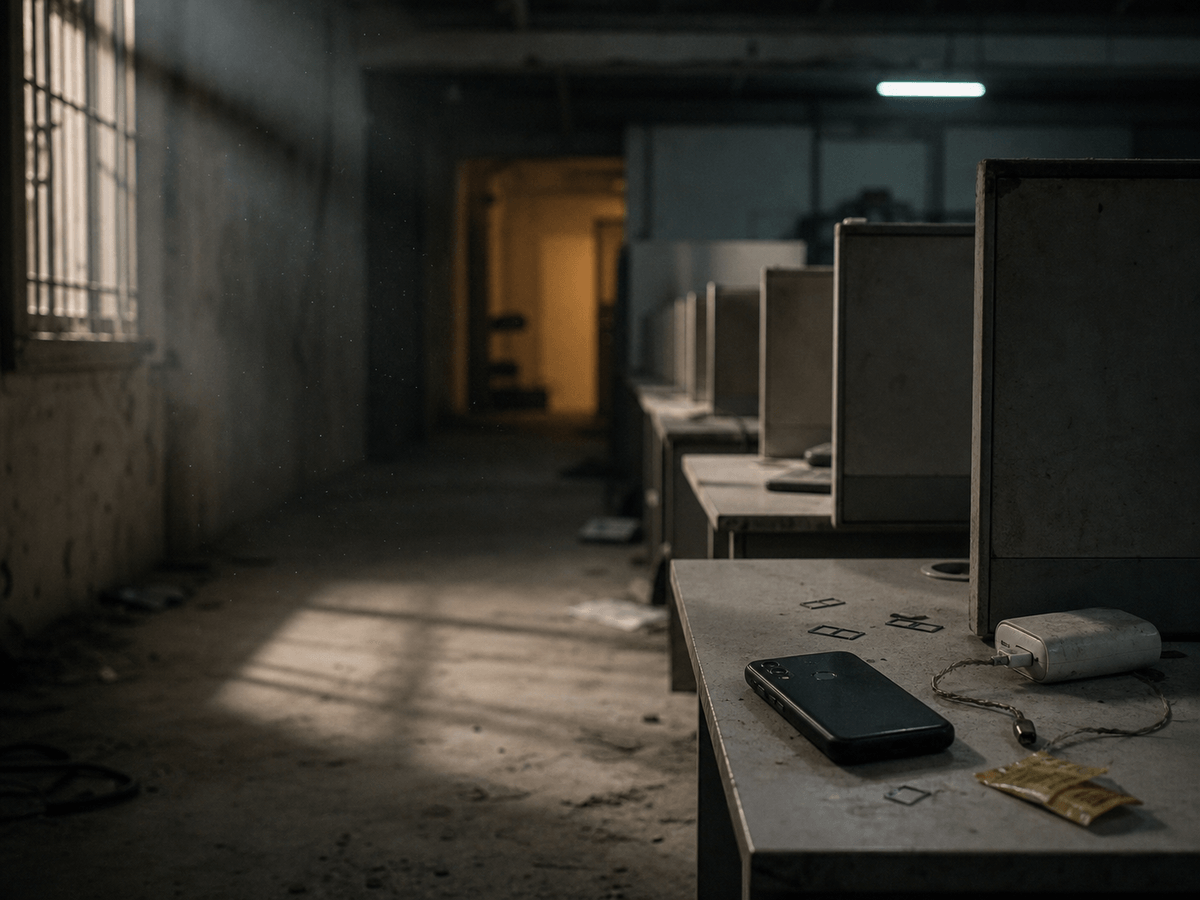
On 4 June, Meta, Microsoft, Coinbase, the US Department of Justice and the Royal Thai Police spent a week doing the thing that everyone agrees should be done about Southeast Asia’s scam compounds, and did it well: 1.4 million Facebook and Instagram accounts, pages and groups removed; roughly 20,000 Microsoft accounts closed; thousands of Starlink kits flagged; about US$3.8 million in cryptocurrency frozen by Coinbase; and 63 people arrested in Bangkok (the arrests being the part that involves actual handcuffs rather than a button in a content-moderation console, which is worth holding onto, because the difference between the two will turn out to be the whole point).
The numbers are real and they are large and they are, I want to suggest gently, slightly beside the point, in the specific way that a very large number can be beside the point. The thing about a scam compound is that it is a business, and like any business it has inventory and it has the firm. The accounts are the inventory. The compound, the building on the Myanmar or Cambodian or Laotian border with the trafficked workers and the Chinese-linked syndicate that runs them and the floor managers who, per survivor testimony collected this year, administer electric shocks to staff who miss their numbers, is the firm. The accounts are the inventory; the compound is the firm; and you have spent the week deleting inventory.
The accounts are the inventory; the compound is the firm; and you have spent the week deleting inventory.
Here is the argument, stated plainly so it can be disagreed with: a coordinated platform-and-law-enforcement takedown is genuinely good at the layer it operates on and structurally unable to reach the layer that matters, and the second fact is more durable than the first. The United Nations puts the trafficked population in these compounds at around 300,000 people; one research estimate puts annual revenues from the regional scam economy near US$64 billion; the UNODC traced somewhere between US$18 billion and US$37 billion in global losses to the sector in a single recent year. Against those denominators, 1.4 million accounts and US$3.8 million frozen is a rounding error that took an extraordinary amount of coordination to produce, which is not a criticism of the coordination so much as an observation about the size of the denominator.
And here is the part that makes the takedown feel less like a victory and more like a tide table. When China leaned on the Myanmar border last year (Beijing has its own grievance, since most of the syndicates are Chinese-led and a great many of the victims are Chinese, and Beijing has been executing the operators it can reach), the compounds did not close. They moved, to Laos, to Cambodia, and now, per reporting out of Colombo, increasingly to Sri Lanka, which offers a relaxed visa regime and fast internet, which is all a scam compound actually requires.[^1] Delete a million accounts and the marginal cost of the next million is a weekend and a sheet of fresh SIMs. And yet the syndicates would, if pressed, surely concede the campaign cost them something real, a bad week, some seized hardware, sixty-three people they now have to replace; they would simply price it as overhead, which is what it is.
Every counterparty in a Southeast Asian chat now half-assumes the other side is running a script, and that assumption is the most expensive line item in the whole affair.
What the warrant cannot reach, and what no quarterly disruption number will repair, is the thing the compounds have already done to the channels the rest of us sell and deal through. The deal in this region happens in a WhatsApp thread, a Telegram group, an Instagram DM; that is where the term sheet gets floated and the supplier gets vetted and the introduction gets made. Every counterparty in a Southeast Asian chat now half-assumes the other side is running a script, and that assumption is the most expensive line item in the whole affair. You can freeze the crypto. The doubt does not unfreeze. The compound on the border counts last week as overhead and reopens in Sri Lanka by the weekend; the rest of us keep the suspicion, which was always the cheaper thing for them to manufacture and the dearer thing for us to carry.
[^1]: The Starlink kits in the seizure tally are the tell. A business whose only fixed requirements are electricity, bandwidth and people it can keep against their will is a business that treats a national border as a logistics question, not a wall.