
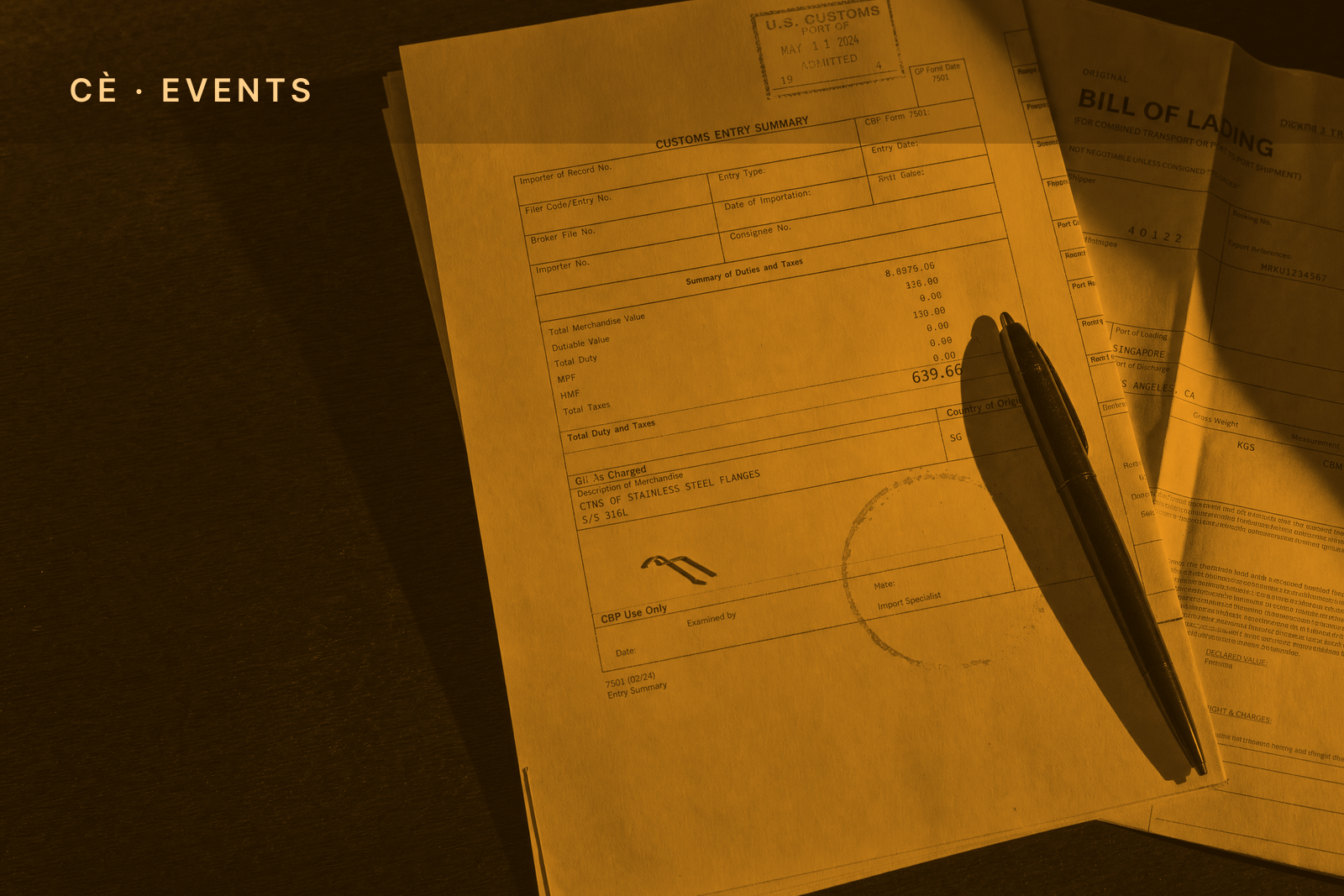
The invoice a Singapore importer files with US customs on 24 July will carry a line it did not a week earlier, and the line is a tariff the Supreme Court already struck down once (which is the sort of thing that happens when a tax is popular with the people who levy it and unpopular only with the people who pay it).
The sequence moved fast. On 20 February the Court held, six to three, that the International Emergency Economic Powers Act does not let a president set tariffs, and the IEEPA duties switched off at midnight on 24 February. Washington reached for Section 122, a stopgap surcharge capped at fifteen percent, and set it at ten for a hundred and fifty days. They run out on 24 July. What replaces them is Section 301, the four digits of trade law used against China since 2018.1 Ambassador Greer, the Trade Representative, has said concluding the new 301 investigations by the 24th is the plan.
Every importer between Singapore and San Pedro then does one of two things with the new number: eats it, or passes it.
The date matters more than the mechanism, and a partner should memorise it. On 24 July your landed cost changes, and so does that of every competitor importing the same goods. Freight and input prices move first, before any finished-goods rate is published, because carriers and suppliers reprice on the rumour, not the ruling. Every importer between Singapore and San Pedro then does one of two things with the new number: eats it, or passes it.
The figures USTR put on the table on 2 June are specific enough to price. Of the sixty-odd economies in the forced-labour investigation, it proposed a ten-percent additional duty for the fifteen it credits with some prohibition on the books, Indonesia, Malaysia and Cambodia among them, and twelve and a half percent for the rest, Vietnam and Thailand included. Singapore carries the flat ten-percent Section 122 baseline until the 24th and is named in the same probe. The public hearing ran on 7 July; comments closed the day before. And yet the calendar, not the comment file, is running this.
A China-plus-one supply chain that is really China-plus-a-loading-dock is about to be priced as China.
The China layer is where it stops being a customs-desk story. Beijing’s commerce ministry has called the 301 probes ‘extremely unilateral, arbitrary and discriminatory,’ which is roughly what you would say if the tool aimed at your excess-capacity exports also caught the countries you route them through. That routing is the exposure. The US-Vietnam deal signed last July carries a forty-percent tariff on transshipment, and under US customs’ substantial-transformation test, snapping Chinese components together in Johor or Hải Phòng does not buy a fresh country of origin. A China-plus-one supply chain that is really China-plus-a-loading-dock is about to be priced as China.
So, three moves before the 24th, in the order a partner can make them without you:
- Lock freight and supplier pricing now, in writing, dated past the 24th. The rate you can fix on 9 July is cheaper than the one you negotiate on 25 July.
- Write a fuel-and-tariff surcharge clause into every premium contract you sign this month, so the next move in the number is the customer’s problem by prior agreement.
- Drop the low-margin volume you are still carrying out of habit. A twelve-and-a-half-point duty on a line that already clears four points of margin turns that line into a subtraction.
The invoice on the 24th will look almost identical to the last one. One line will be different, and the businesses that spent the first three weeks of July arguing about the comment file instead of the freight contract will learn, at the border, which side of eats-it-or-passes-it they were on.
Footnotes
-
Section 301 spent decades as a sleepy trade-remedy provision, became in 2018 the most consequential four digits in global commerce, and is now being asked to also carry forced-labour findings and excess-capacity findings at once, which is a great deal of weight for four digits to bear. ↩