
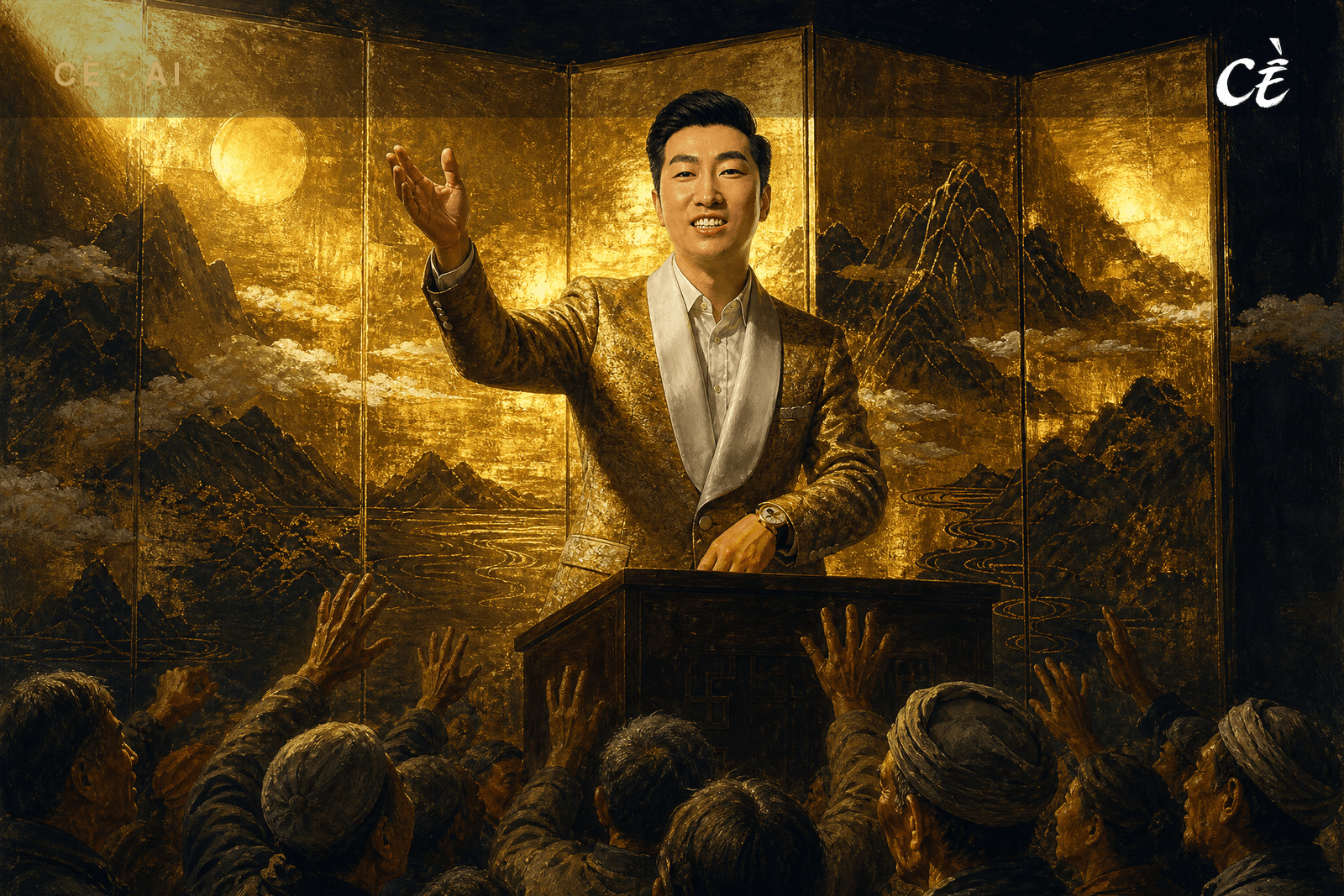
Zhou Wenqiang, a Chinese money coach with more than 20 million followers, has not posted a video since 15 August. A detention notice dated the next day, passed around WeChat groups since late August, says Guangzhou police took him into custody; his company calls it a forgery, and in the same call admits its bank account is frozen, money unable to go in or out. At one of his classes this year, nine in ten students came from the countryside, and his top course cost about US$96,000.
He was born in 1987 in Huixian, a county in Henan, to a farming family. When his father’s brick kiln went under, his father went to jail over its debts, and Zhou, about fifteen, left school for building sites and a factory floor.
In 2005 he was selling MP3 players in Luoyang when he read Rich Dad Poor Dad, the American bestseller that tells wage earners to buy assets instead. He opened a training company in 2012, renamed it Huicheng in 2019, and built a short-video machine: dozens of verified accounts on Douyin and Kuaishou, China’s two big short-video apps, with more than ten million followers on each.
The clip that made his name is a speech about betting everything. “越是穷人越要敢于梭哈,” he says: the poorer you are, the more you should dare to go all in.
No rich list carries his name. The only number for his fortune is his own claim that the company brings in several billion yuan a year, hundreds of millions of US dollars, and nobody has verified it.
He collected proof of standing the way he collected followers: a startup-mentor seat at Capital University of Economics and Business in Beijing in 2024, US$140,000 (¥1 million) of flood relief for Guangxi this July, and on 4 August a thank-you letter from Nanning’s party committee.
Twelve days later, according to the notice no official will confirm, he was in a Guangzhou detention centre.
The trouble started in March, when Southern Weekly, a Guangzhou paper known for investigations, sent a reporter into one of Zhou’s four-day classes at a five-star hotel in a southern coastal town. More than 2,000 students handed their phones to staff at the door, and when the host asked who came from the countryside, over 90 percent raised a hand.
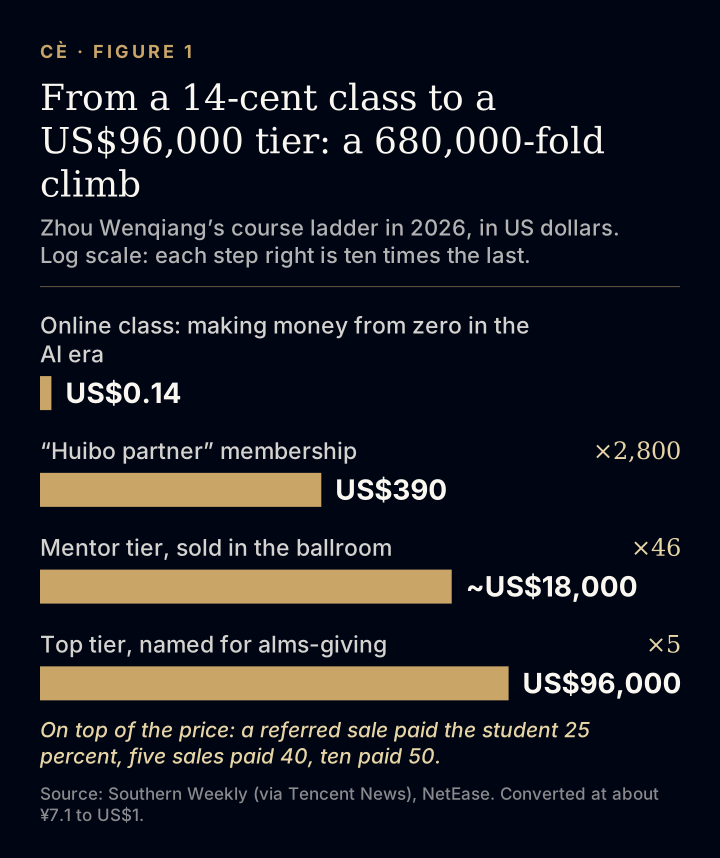
The course ladder ran in four rungs. A US$0.14 (¥1) online class on making money from zero in the AI era; US$390 for a membership called “Huibo partner”; ballroom classes with a mentor tier near US$18,000; and a top tier called 福布施, after the Buddhist word for giving alms, at about US$96,000.
One student explained what AI would do for them: “I’m not good-looking, but AI can swap my face.” Zhou worked the hall with the students’ own bank balances. “你卡里不还有12万吗?” Don’t you still have US$17,000 on your card?
Commission turned buyers into sellers: one referred sale paid 25 percent, five paid 40, ten paid 50.
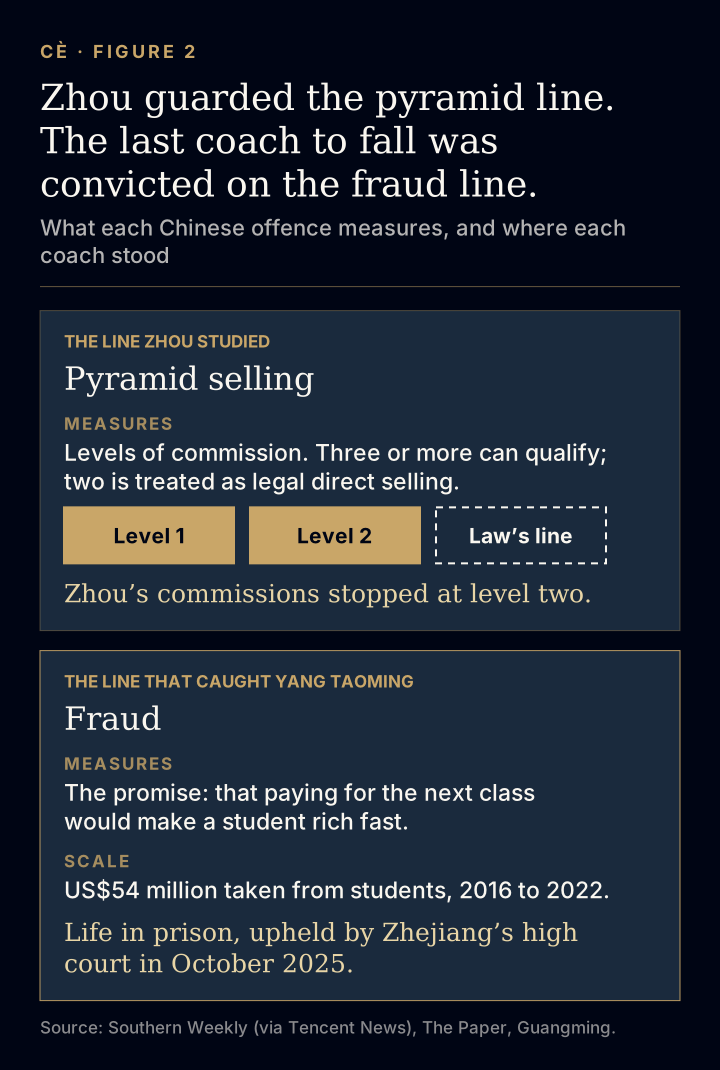
And Zhou told the hall exactly where the law stopped: “三级以上才是传销,” only three levels of commission or more counts as pyramid selling. His commissions stopped at two.
In late February, a self-styled motivation coach filled a five-star hotel in Ningbo with nearly a thousand students for a three-day class on persuasion. Becoming his disciple cost a cumulative US$20,000; students paid with credit cards and loans, and one bought a single hair from his head for thousands of US dollars.
Three days after the class ended, Ningbo police opened a fraud case against his company and detained more than twenty people, him among them. More than two and a half years later, Zhejiang’s high court upheld his sentence: life in prison for a US$54 million fraud.
That was Yang Taoming in Ningbo, 2023. It is also Zhou Wenqiang in Guangzhou, this autumn.
To put it in the bluntest terms, he guarded the wrong door.
Most people watching believe the danger to a Chinese course seller is the pyramid line, and so did Zhou. To put it in the bluntest terms, he guarded the wrong door.
The Ningbo court convicted Yang of fraud, a crime that needs no commission levels at all: only a seller who means to keep the money, and a story he invented or a truth he hid. What it punished was a promise, that paying for the next rung would make a student rich fast.
The notice in the WeChat groups names a third law: Article 300 of the Criminal Law, using superstition to undermine the law, the article China uses against cults, three to seven years as the standard sentence. Either a forger picked an odd charge, or a detective looked at a top tier named for alms-giving, and at the donation codes held up beside the returned phones.
The freeze carries the most weight. China’s Commercial Banking Law lets a bank refuse to freeze a company’s deposits unless a law says otherwise, so a rival’s complaint cannot lock an account; an agency the law empowers, such as a court or the police, has to. Huicheng’s switchboard blamed “a malicious report”.
Huicheng is out of money it can move; its own staff told a caller in September not to buy. The students are out of a quick refund; the lawyer one of them hired advised negotiating, because a lawsuit takes too long. Zhou is out of the thing the whole ladder starts from, a new video, and has been for eight weeks.
Only the police are short of nothing, which is why they can afford to say nothing.
The persona was always the product. A boy whose father went to jail over the family’s debts bet everything on himself, won, and has sold that single result as a method ever since.
Advice drawn from the one person who won a bet tells you nothing about the odds.
Advice drawn from the one person who won a bet tells you nothing about the odds. The student with US$17,000 left on the card is the one paying for the missing number.

If you sell a course or coaching anywhere in the region, his ladder is your ladder: a free video, a cheap first step, a middle tier, a top tier. The ladder is legal; the risk sits in whatever part of the top rung’s promise a buyer cannot count afterwards.
So this week, write your top tier down the way an auditor would read it: the hours, the sessions, what the buyer walks away holding, and your refund rule in one line. If that list is thinner than your sales page, the gap is your exposure.
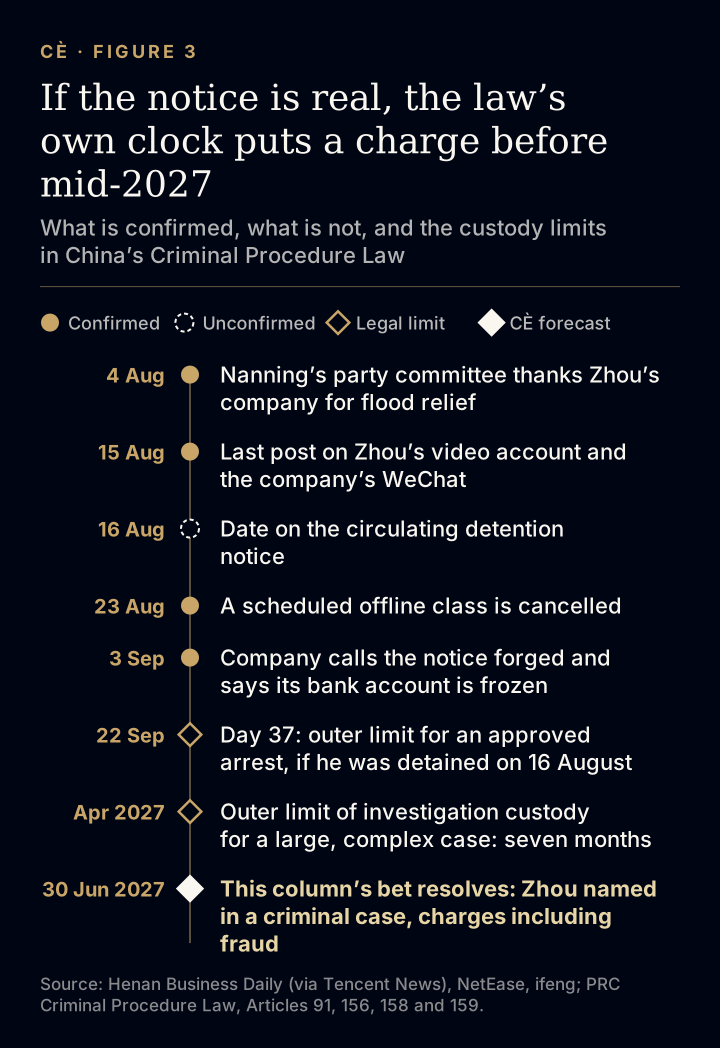
This column’s bet: by 30 June 2027, a Chinese police force, prosecutor or court, or state media quoting one, names Zhou Wenqiang in a criminal case, and the charges include fraud, whatever the August notice says. Confidence is a lean, about six in ten, because the bet stands on a document no official has confirmed.
The call rests on one thing: that Huicheng’s frozen account and Zhou’s eight weeks of silence come from the police rather than a rival’s complaint.
The date comes from China’s Criminal Procedure Law: at most 37 days from detention to an approved arrest, then up to seven months of investigation custody for a large, complex case. A man held on 16 August reaches prosecutors by late April and a formal charge sheet by June.
What is surprising is the silence on both sides: no police bulletin in eight weeks, and no video from a man whose accounts once posted his speeches every day.
Watch 周文强财商工作室, silent since 15 August. One new video in Zhou’s own voice, filmed anywhere, means the notice was forged and this bet is wrong; his company said he had a class abroad in September, and a man who teaches for a living films his classes.

In March, staff handed the phones back at the ballroom door, with donation codes held out beside them.
The phones, at least, came back.