
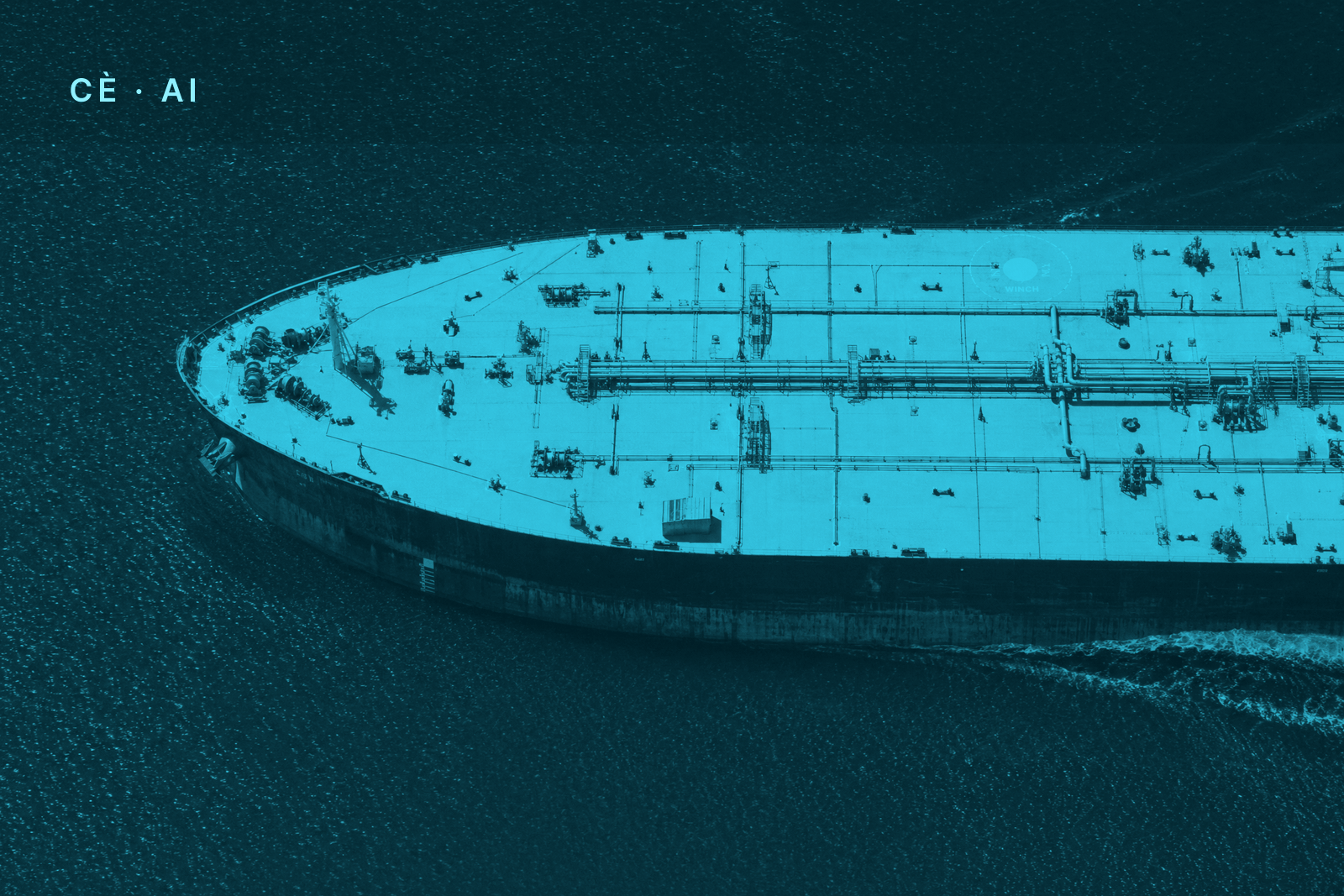
The toll lasted about a day. Early this week the United States declared itself “THE GUARDIAN OF THE HORMUZ STRAIT” and put twenty percent on every cargo moving through it. Within a day the fee was gone, withdrawn in favour of trade and investment deals the Gulf states would be making into the United States, while the naval blockade of Iranian ports it had arrived beside sailed on. In the hours it existed it drew a rebuke from the International Maritime Organization, which said there is no legal basis through which to introduce mandatory tolls simply to transit through a strait, and one word from Brazil’s president: piracy.
The week was reported as a fight over oil. The fight was over the thing the oil takes for granted. Passage through a strait is either a commons or a concession, and for eighty years the United States answered it one way, at its own expense, with a fleet that made free transit look like weather rather than policy. Charging for it converts the fleet into a service with an invoice. That conversion is the game, and the twenty percent was the price tag that made it legible.
The shooting under it is real. Fighting resumed on 7 July after June’s ceasefire collapsed. On a third consecutive night, CENTCOM struck coastal military targets at Bandar Abbas, Bushehr, Chah Bahar, Jask, Konarak and Abu Musa. Iran’s Revolutionary Guard answered at al-Juffair in Bahrain, home of the Fifth Fleet, at Patriot batteries and an ammunition depot in Kuwait, and at an airbase in Jordan. Two UAE-associated tankers took cruise missiles in the strait; an Indian crew member was killed and eight more mariners wounded. The ships did the arithmetic themselves. Forty-five vessels crossed on one Monday; by the Thursday, five, against a pre-war run rate near a hundred and thirty a day. Brent spiked to $84.78, a one-month high, still well under the roughly $120 April produced.
Denmark ran this experiment to its natural end. In 1429 Eric of Pomerania began charging ships to pass the Øresund into the Baltic. From 1567 the charge was one to two percent of cargo value. Enforcement was masonry: ships hove to at Helsingør, and the guns there and at Helsingborg could sink a vessel that declined. At its height the Sound Dues ran to two thirds of Danish state income. They ended on 14 March 1857 in the Copenhagen Convention, when the maritime powers combined and bought the right out for 33.5 million rigsdaler, Britain and Russia paying about a third each. Washington declined to join the pool, negotiated separately, and paid Denmark $393,000 for perpetual free passage.1
That last line is the inheritance this week spent. The United States bought its way out of a strait toll in 1857 and wrote one in 2026. The four hundred and twenty-eight years the Danish version ran measure what a toll actually needs. Denmark had Kronborg, a channel narrow enough to range with cannon, and a customs house at Helsingør with the books to run it. The claim on Hormuz has a carrier group, which can sink a ship but cannot assess one, and no counting house on either shore. A percentage of declared cargo value across a hundred and thirty transits a day is an administrative act long before it is a military one.
This column has argued that a chokepoint fires backwards on whoever wields it. Iran reopened the strait it had threatened because its own revenue crosses it. China’s rare-earth controls and Washington’s chip controls recoil more slowly, through the substitution clock. Hormuz with an American tollkeeper inverts the first case: almost none of that oil is going to the United States, so the recoil cannot arrive through the treasury. A chokepoint’s leverage fires backwards on a wielder who does not depend on it, through the substitution clock and the erosion of the free-transit norm rather than through its treasury. Free transit under UNCLOS is the reason an American fleet is cheap. Price the water once, and every other state holding narrow water has been handed the precedent, drafted in Washington.
That posture used to hedge against the strait being shut. It now hedges against the strait being billed.
Asia priced this faster than Washington did. Economists and shipping analysts told the South China Morning Post the region is better placed to absorb the blow this time, on alternative routes and the technology boom driving its growth. This column has argued that China’s appetite for sanctioned barrels is what keeps Hormuz open, and that the same dependency gives Beijing every reason to accelerate supply that never touches the strait. A week in which Washington prices transit is a week that makes Beijing’s argument for it, at no charge. Singapore’s version of the answer is older and quieter: stockpile, diversify, assume the lane closes one day and arrange not to be ruined when it does. That posture used to hedge against the strait being shut. It now hedges against the strait being billed.
So the call. No United States transit charge on commercial shipping through the Strait of Hormuz, the withdrawn twenty percent reimbursement fee or any successor to it, will be in force and routinely paid by the middle of July 2027; it stays rescinded, uncollected, or defied into irrelevance rather than hardening into a durable revenue regime. Confidence: likely. The load-bearing assumption is that major cargo owners, flag states and Gulf partners keep treating a transit charge as illegitimate under freedom-of-navigation law and route around it or refuse it, so that no critical mass of shippers ever normalises paying. Break that and the call breaks: if the Gulf trade and investment deals that replaced the fee reappear as a per-cargo charge under a softer name, and the majors pay because their hulls are already in the queue, the toll will have been collected after all, and this column will have misread which century it was standing in.
The claim on Hormuz has a carrier group, which can sink a ship but cannot assess one.
Denmark’s toll ran four hundred and twenty-eight years, and killing it took a coalition, a convention and 33.5 million rigsdaler. Washington’s went away by itself, overnight.
Footnotes
-
About $13.6m in today’s money, for perpetual free passage of a strait, in an arrangement the republic negotiated precisely because it would not pay a percentage of cargo. ↩