
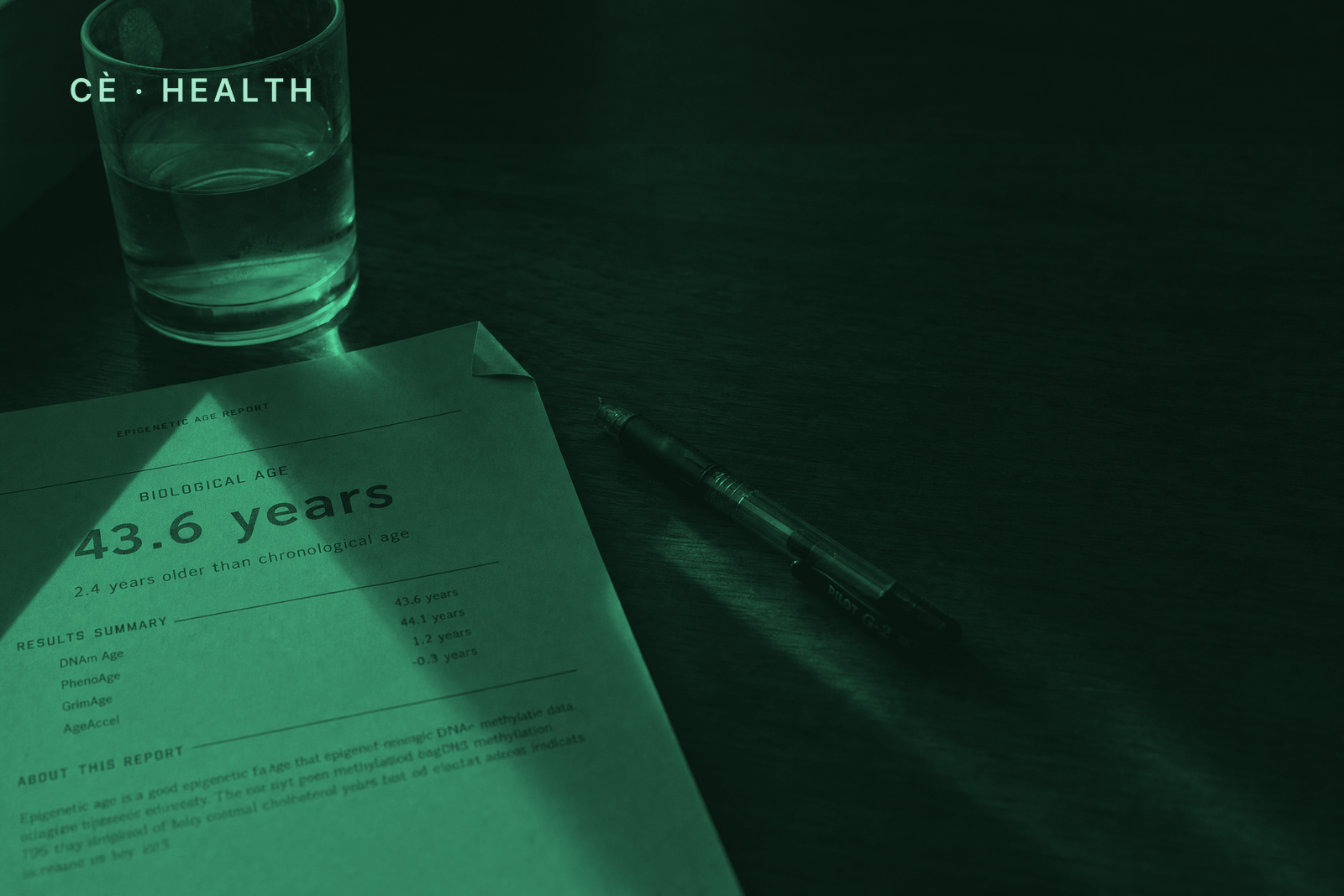
A printed epigenetic age report on a teak table at the Four Seasons, where Chi Longevity runs its clinic, tells a Singapore principal he is biologically forty-four against a calendar age of fifty-one. He paid for the panel, the consult, and the diagnostics. The number that moved him most cost nothing: his average sleep, pulled off his own wrist, was five hours and ten minutes a night.
On 2 June, NewLimit, the cellular-reprogramming company co-founded by Coinbase’s Brian Armstrong, announced US$435 million in financing led by Founders Fund, reportedly at a valuation near US$3.1 billion, and said its first human trial would begin years ahead of schedule. The lead programme reverses age in old human liver cells. It is real money on a real mechanism, and it is still a bet on cells in a dish.
Here is the operator’s frame. Treat healthspan as infrastructure, the way you treat the balance sheet, and then ask which longevity assets you actually control this quarter. The reprogramming bet you do not control; you can only wait for it. The boring levers you control entirely, starting tonight.
Those levers are older than any of this. Sleep above seven hours. Zone-2 aerobic work, three sessions, plus resistance training twice, because grip strength and leg strength track mortality more reliably than almost any blood marker an executive will pay to have drawn. Not eating like a hawker-centre regular at midnight, because late glucose loads cost you the deep sleep you were short on already. Alcohol restraint, which is the single line item most regional dinners are built to violate. None of it is proprietary. All of it compounds.
Discipline you can start tonight compounds; a therapy you are waiting for does not.
Discipline you can start tonight compounds; a therapy you are waiting for does not. That is the whole asymmetry. The reprogramming science may arrive, and if it does the principals reading this will be first in line and able to afford it. Between now and then, a decade of six-hour nights and skipped training is a position you cannot reopen later at a better price. The clock does not pause while the trial enrols.
The region has built the surfaces to sell both halves at once. Singapore opened a geroscience trial centre at NUS Medicine and positions itself openly as Asia’s longevity hub; Elyx Life took the Raffles Arcade, Chi Longevity took the Four Seasons. In China, Fudan’s Zhongshan Hospital now runs a dedicated longevity clinic, and the country is projected to hold roughly six million more high-net-worth individuals by year end, most of them a plausible market for a panel that prices certainty.1 The diagnostics are excellent and increasingly available. They are also, mostly, a very precise readout of how you have been sleeping and training, sold back to you at a premium.
It is real money on a real mechanism, and it is still a bet on cells in a dish.
The comfort-crisis reading is the uncomfortable one. The principal at the Four Seasons did not have a reprogramming problem. He had a calendar that ended his day at a desk and a kitchen that stayed open. The US$435 million is chasing the frontier; the five-hour sleep average is the thing in his actual control, and it is the cheaper position by several orders of magnitude.
Back at the teak table, the report is still warm from the printer, and the most valuable line on it is the one about his sleep, which no investor is funding and which he could change tonight.
Footnotes
-
The panel that tells a fifty-one-year-old he is biologically forty-four is, statistically, mostly grading his last six months of sleep. The clinics know this. It is on the second page. ↩