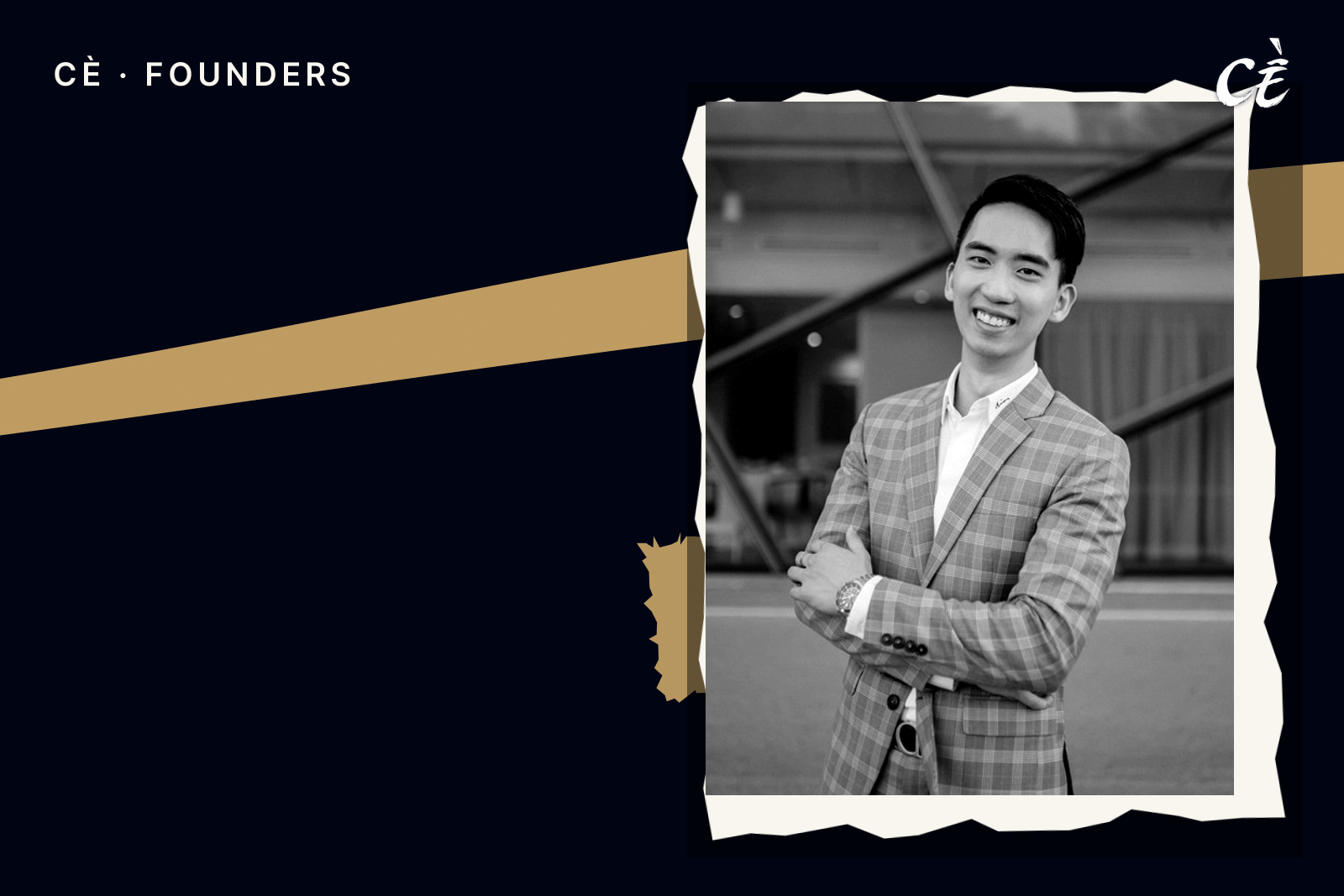
Christian Oh wrote to the Ministry of Education for permission before he sold a single property, and got it.
Three and a half years later the call came anyway, and it carried two options: drop the real estate work and keep the teaching scholarship, or break the bond and repay six figures.
The figure was close to $120,000. He paid it from savings.
The silence came first. One month with no stipend, then two, then close to six, with nobody at the ministry telling him why. Somebody had complained, Oh says, and an MOE scholar doing real estate was not right.
What makes the decision worth reading about is that both sides of it were real. He was reading Chemistry at NUS on a teaching scholarship, and he had over 100 clients who had bought through him and six people training under him.
The first of those years paid him nothing at all. Two hundred doors a day, a hundred calls, and, by his own count, zero dollars for twelve months.
Hesitation at the plant doesn’t protect you.
He is thirty now. Stacked Homes reported him holding thirteen properties before divesting four, with the remaining residential and commercial book throwing off about S$103,000 a month, and in May he bought the Food Haus coffeeshop at Block 421 Ang Mo Kio Avenue 10, ten stalls, the first whole coffeeshop he has owned. He grew up in the block facing it.
Asked what he would hand a founder starting where he started, Oh reaches for none of that. He goes back to pole vaulting, which he did at school, and to the part of the jump nobody watches.
“Set the bar before you run,” he says, and he means the height literally, fixed before the run-up starts. “Decide while you’re already moving and you’ll always talk yourself into something lower.”
Call it the bar rule, and note that Oh’s own account is that he broke it. He walked into the largest decision of his life without having named what he was running at, which is why it took months and a great deal of counsel to settle.
Hesitation at the plant doesn’t protect you.
The plant is the moment the pole goes into the box and the vaulter throws his weight forward. Half a commitment there produces no jump and usually an injury.
His read on founders who stall is that they mistake the halfway position for caution, when it is the one position that carries all of the cost and none of the upside.
How he decides now shows up in what he bought. Before taking Blk 421 he went six or seven times, mornings for the breakfast crowd, evenings to see whether the estate was still alive after dark, weekends because it is a different place again.
“A seller will show you the best hour,” he says. “The other hours are the actual information.”
How he treats the people already inside an asset shows up in what he did next. He committed to no rent increase for two years for the stallholders he inherited, one of whom is struggling, and he is running a campaign to save that stall instead of replacing the tenant.
How he handles being wrong, he volunteers. He used to select for aggressiveness, took someone in on exactly that, and learned afterwards that what the person had in mind was never the team.
The line he keeps for founders standing at the edge concerns what comes after it.
The leap is one afternoon.
“The leap is one afternoon.”
What costs, in his account, is the three years afterwards, when nobody is watching, nobody is impressed, and the doors still have to be knocked. He set the bar for a coffeeshop before he ever bid on one.1
Footnotes
-
Oh read Chemistry at NUS on the teaching scholarship and took a local exchange to clear a semester on a pass grade while the real estate work ran at roughly eighty percent of his week. He sat with CÈ’s AI interviewer on 2 September 2026, by text; quotes lightly normalised for print, wording untouched, transcripts on file. ↩